Connecting tribal students with opportunities in education
Steven Chischilly and Virgil Dupuis have each spent the majority of their careers helping to connect tribal students with educational opportunities in the sciences — Steven, through 21 years of teaching at Navajo Technical University, and Virgil, through 20 years as Extension Director at Salish Kootenai College.
During that time, they have become familiar with the challenges that many Native American students face when pursuing higher education. They have also seen firsthand the impact that completion of a degree program can have on students, their families and communities as students move on into successful careers.
As Steven explains in the podcast, he encourages all of his students at Navajo Technical University to take advantage of undergraduate research opportunities. Internship programs, such as those offered by federal government agencies, may provide housing, stipends and hands-on experience with real-world research projects. These experiences, Steven says, provide the students with valuable job skills.
“I’ve been doing this for 21 years now, and I think [what I like best is] making an impact on my tribe’s not only workforce but the educational legacy for the students that are there,” Steven said. “I like to think I’m making a difference in terms of helping them obtain an education on the reservation that they’re wanting, through the implementation of a curriculum that addresses tribal needs.”
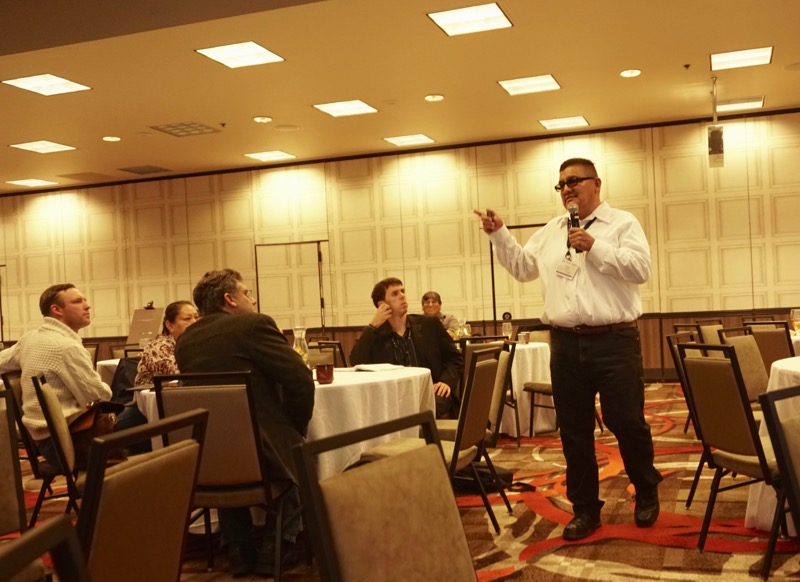
Steven Chischilly speaks during the Tribal Education Forum at the Native Waters on Arid Lands 2017 Tribal Summit.
At Salish Kootenay College, Virgil works with students on research projects with direct benefits for the tribe — invasive species research, a community gardening project, and research on food sovereignty, to name a few.
“I enjoy the freedom I have working at the college,” Virgil said. “I work on projects that are highly interesting. They are relevant – they make a big difference in what we’re looking at and what we’re doing. I like to see students do well.”



.png)
 More
More
 Religion & Spirituality
 Education
 Arts and Design
 Health
 Fashion & Beauty
 Government & Organizations
 Kids & family
 Music
Music News & Politics
 Science & Medicine
 Society & Culture
 Sports & Recreation
 TV & Film
 Technology
 Philosophy
 Storytelling
 Horror and Paranomal
 True Crime
 Leisure
 Travel
 Fiction
 Crypto
 Marketing
 History
 Comedy
 Arts
Arts Games & Hobbies
 Business
 Motivation