|
San Francisco officials say they will commit $15 million annually to modernize security infrastructure and hire four additional staff for the Department of Public Health security team following the fatal stabbing of a social worker in December.
That’s according to a new report released Wednesday that pointed to a lack of adequate safety protections leading up to the death of Alberto Rangel, who was killed by a patient at Ward 86, the city’s historic HIV/AIDS clinic at Zuckerberg San Francisco General Hospital. The funding promise comes as San Francisco is facing a massive budget deficit and is cutting positions and funding across departments, including public health.
“We are committed to maintaining safe and secure environments for the staff, patients and visitors who rely on our care every day,” Director of Health Daniel Tsai said. “We can and must do more. This assessment and these investments will have a lasting impact on the safety and well-being of all who walk through our doors. Alberto was a beloved social worker at Ward 86, and we will continue to honor his memory.”
The 13-page report presented a list of recommendations for the hospital and health department in response to the stabbing. It calls for a more consistent process for threat risk escalation and follow-up, more clarity on how different security and law enforcement should respond to threats, and psychological support for staff. It also identified the need for better security measures at Ward 86, including weapons detection and panic buttons for staff.
“We heard from many staff members within ZSFG and our partner clinical sites about ways to make meaningful and lasting improvements to safety,” said Dr. Susan Ehrlich, the CEO of Zuckerberg San Francisco General Hospital. “Staff also reminded us not to forget the importance of making sure our patients feel welcome. We need to remain accessible to our vulnerable city residents, while instituting changes that protect everyone who walks through our doors.”
The health department said it has already developed a 24/7 threat management team to better coordinate risk assessments, weapons detection systems and security staff at all DPH sites.
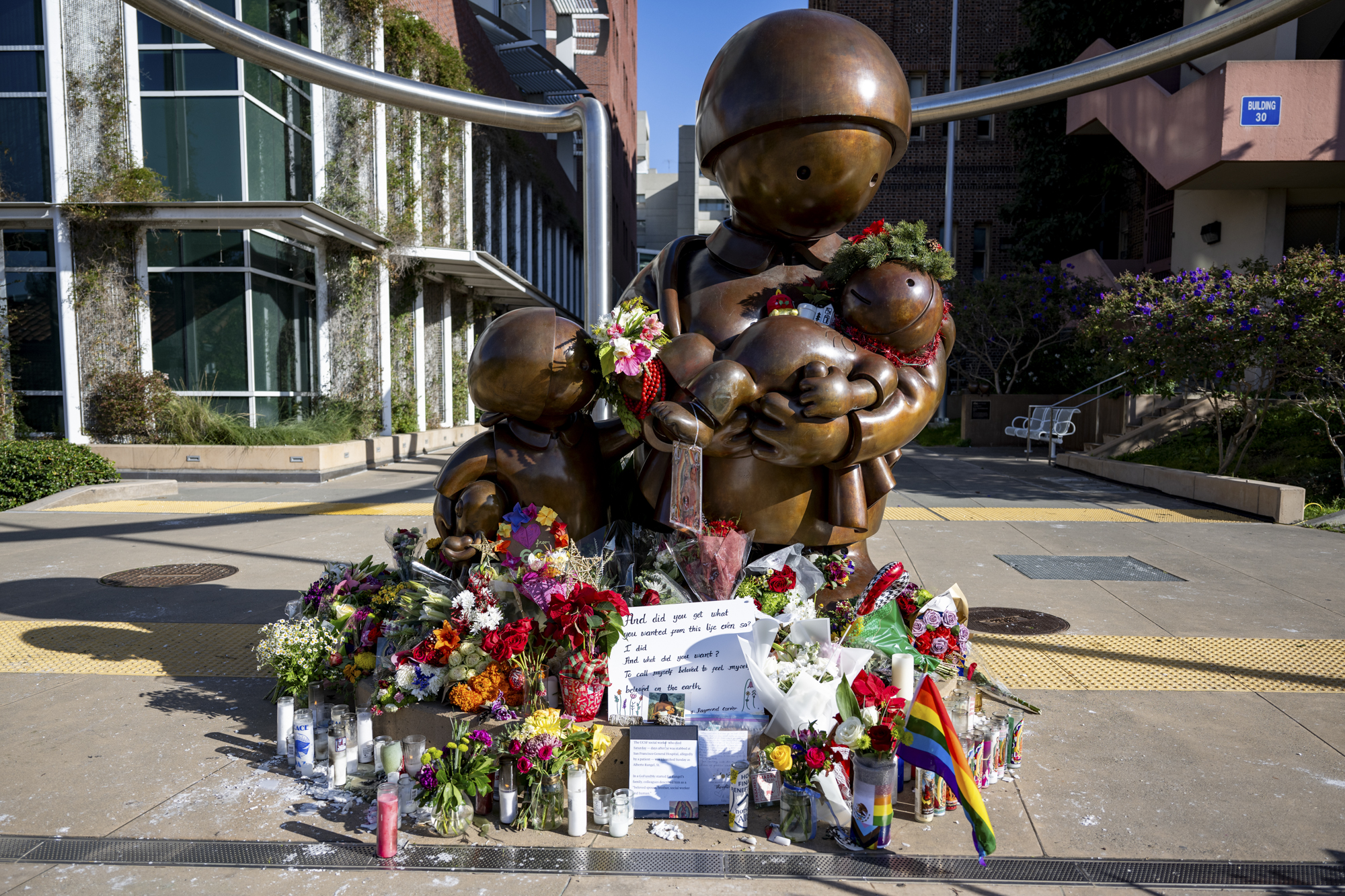 A memorial for social worker Alberto Rangel, who was fatally stabbed on Dec. 4 at Zuckerberg San Francisco General Hospital, outside the hospital on Dec. 9, 2025. (Beth LaBerge/KQED) A memorial for social worker Alberto Rangel, who was fatally stabbed on Dec. 4 at Zuckerberg San Francisco General Hospital, outside the hospital on Dec. 9, 2025. (Beth LaBerge/KQED)
The report provided a detailed timeline of events, including how staff reported the patient’s dangerous behavior in the weeks before he stabbed Rangel.
According to the timeline, the man, Wilfredo Tortolero-Arriechi, who has pleaded not guilty to a murder charge, exhibited “elevated behaviors” during an appointment with his doctor around Nov. 20, prompting the physician and nursing leadership to share their concerns with DPH security.
Security attempted to contact him but was unable to reach him, and a sheriff’s lieutenant conducted a criminal history check that showed no warrants. On the day of the stabbing, a sheriff’s deputy was in Ward 86, but not in the reception area where the incident occurred.The assailant arrived around 1:30 looking to speak with his doctor, but was connected with Rangel and stabbed him from behind with a knife at 1:36 p.m. A Code Blue — which hospitals call when someone is having a life-threatening medical emergency — was paged at 1:44 p.m., and he arrived in the emergency department at 2:03 p.m.
The investigation revealed that one of Rangel’s colleagues at SF General first intervened in the attack, not a sheriff’s deputy.
Ward 86 staff previously told KQED that they were dismayed by the city’s public response immediately following the tragic incident, particularly around how the San Francisco Sheriff’s union posted images online claiming that one of their deputies prevented a “mass stabbing” through swift intervention.
Ward 86 social worker Alejandro Alvarez was the first person to pull the attacker off of Rangel.
“Staff had to repeatedly direct the deputy to remove the attacker from the scene,” Alvarez said at a public rally in March outside the administrative offices for USCF, which oversees SF General alongside DPH.
“When staff have to guide the sheriff to a life-threatening moment, that tells us something in this system is not working. That did not align with the public narrative that was shared that day by the Sheriff’s Association.”
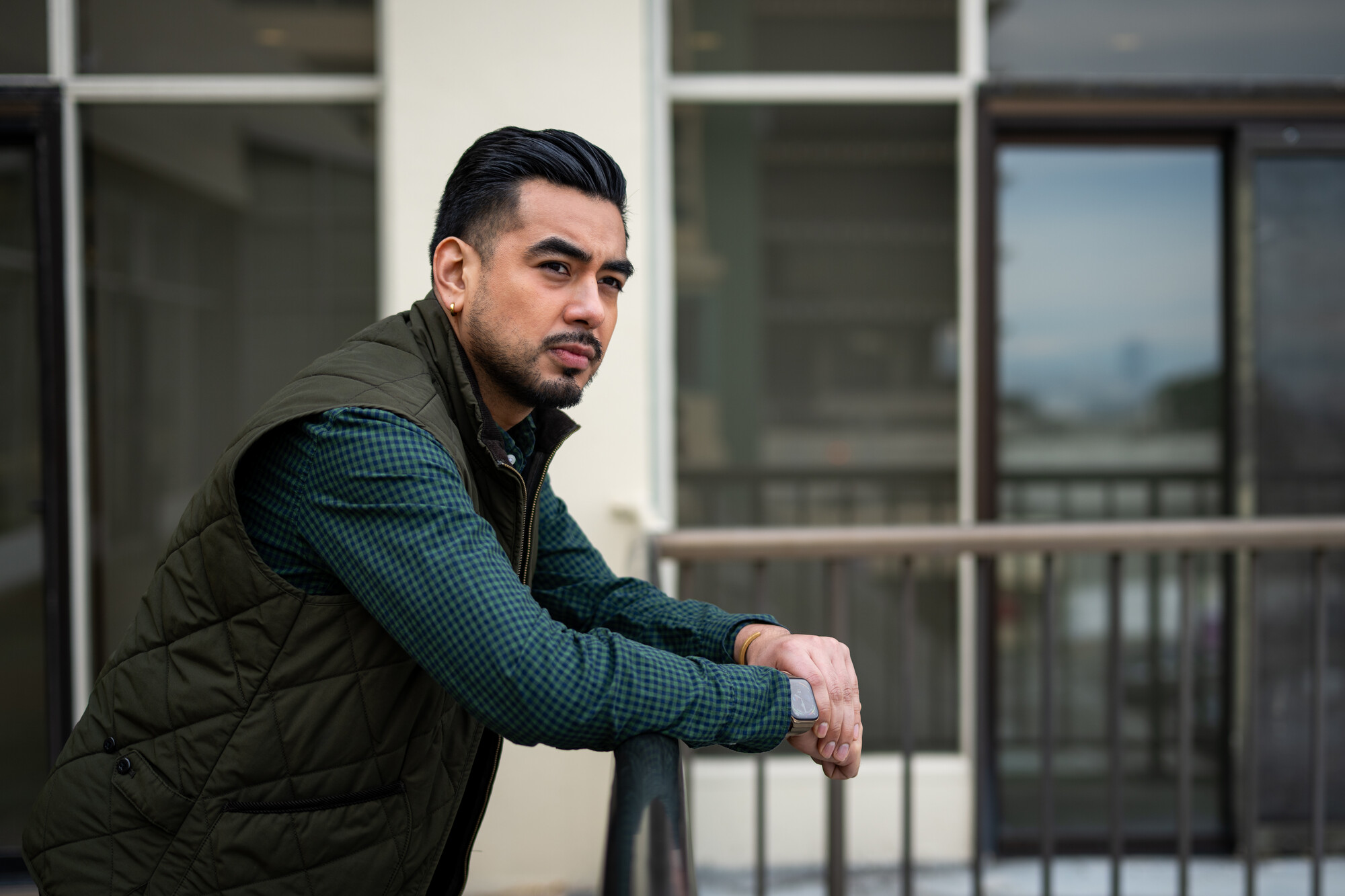 Alex Alvarez, a clinical social worker, stands on a parking garage at UCSF Parnassus campus in San Francisco on Dec. 30, 2025. He said the view from the gym helps him recover, reflect and think following the fatal stabbing of his colleague Alberto Rangel at Zuckerberg San Francisco General Hospital on Dec. 4, 2025. (Beth LaBerge/KQED) Alex Alvarez, a clinical social worker, stands on a parking garage at UCSF Parnassus campus in San Francisco on Dec. 30, 2025. He said the view from the gym helps him recover, reflect and think following the fatal stabbing of his colleague Alberto Rangel at Zuckerberg San Francisco General Hospital on Dec. 4, 2025. (Beth LaBerge/KQED)
On Wednesday, after the audit was released, Alvarez said he was feeling “disillusioned” and that the approach leadership had taken felt “top-down” and not collaborative. He’d like to see more financial support for affected employees.
Many staff at Ward 86 affected by the loss of their colleague are still struggling with what comes next, for patient safety and for their own well-being as health care professionals. Many have demanded that UCSF and DPH commit to increased staffing to balance case loads and improve options for necessary time off and mental health care following the incident.
A survey conducted by the union representing UCSF social workers found that the vast majority have either directly experienced or seen violence, and half said they have been sexually assaulted or harassed.
“I live in the aftermath, the hyper vigilance, the disturbed sleep,” Alvarez said. “What comes after that moment is not something you clock out of. It doesn’t end when the shift ends. It doesn’t stay in the building. It doesn’t follow policy timelines.” |



.png)
 More
More
 Religion & Spirituality
 Education
 Arts and Design
 Health
 Fashion & Beauty
 Government & Organizations
 Kids & family
 Music
Music News & Politics
 Science & Medicine
 Society & Culture
 Sports & Recreation
 TV & Film
 Technology
 Philosophy
 Storytelling
 Horror and Paranomal
 True Crime
 Leisure
 Travel
 Fiction
 Crypto
 Marketing
 History
 Comedy
 Arts
Arts Games & Hobbies
 Business
 Motivation