|
A circuit breaker issue sparked a fire at an indoor substation in the South of Market neighborhood in December, which subsequently cut off power for hundreds of thousands of San Francisco residents. That’s according to officials at Pacific Gas & Electric Company, the city’s main power supplier, who gave a report during a public hearing on Thursday about widespread power outages that left swaths of the city in the dark for days this winter.
San Francisco supervisors, residents and merchants drilled representatives from PG&E about what happened when the circuit breaker failure and fire generated a multi-day power outage impacting about 130,000 customers.
“Let’s be clear, that is not a blip. That is not weathering a storm. That’s a third of the city being told to just ‘figure it out,’” said Supervisor Alan Wong, who led the hearing. “It’s food spoiling, it’s medical equipment without power. It’s a family sitting in the dark. It’s caregivers scrambling to protect loved ones, workers losing shifts, and merchants bleeding money by the hour.”
Thursday’s meeting of the city’s Public Safety and Neighborhood Services Committee included a report from PG&E on the outages’ causes and duration, impacts on residents and businesses and potential remedies, as well as the city’s emergency response coordination.
PG&E leaders detailed the company’s response timeline during the event, as well as changes and improvements that are underway, such as better communication structures and platforms.
Repairs at the Mission substation are now complete. An investigation into the initial fire and power failure, as well as follow-up power outages in the following days, is still underway.
 PG&E CEO Sumeet Singh speaks during a press conference at a PG&E substation on Mission and 8th Streets in San Francisco on Dec. 22, 2025, after a fire at the site over the weekend contributed to a major citywide power outage. (Beth LaBerge/KQED) PG&E CEO Sumeet Singh speaks during a press conference at a PG&E substation on Mission and 8th Streets in San Francisco on Dec. 22, 2025, after a fire at the site over the weekend contributed to a major citywide power outage. (Beth LaBerge/KQED)
“I want to be very clear that we take responsibility for the outage that took place last December, and our response to that outage … was unacceptable,” said Sumeet Singh, PG&E CEO, at the hearing. “We are bringing in another third party that’s focused specifically on how we can improve our restoration time estimates during large localized events, particularly when operating conditions are otherwise normal. But in the meantime, we have already implemented a rapid escalation process for large-impact localized events.”
PG&E leaders said that immediately following reports of the fire at the substation, customers were sent automatic updates on restoration times. But due to the complexity of the fire activity at the substation, the power company issued multiple inaccurate estimates for when lights might come back on, frustrating many residents and sending some businesses into a spiral over whether they could ask their staff to return or not.
“We are reviewing our process around automatic customer notification to improve clarity, consistency and accuracy within language messages,” Singh said. “We obviously don’t experience the substation outages to this level, which ends up impacting multiple distribution circuits and lines.”
At a recent Fire Commission meeting, Fire Chief Dean Crispen said communication with PG&E during the crisis was OK, but many challenges remain with the overall system.“There clearly needs to be some upgrades to some of their infrastructure,” Crispen said. “That’s a big challenge.”
The power outages in December caused severe disruptions across the city, affecting households, restaurants and even City Hall. Shortly after the power outages began, PG&E offered customers relief in the form of reimbursements and some hotel stays.
Officials at PG&E on Thursday said the company provided automatic bill credits totalling $50 million to all impacted customers. Residential customers were credited $200, and non-residential customers received $2,500, and the company said about 2,700 claims, or 90% of those submitted, have been resolved.
Still, many residents said they struggled to secure claims.
Sean Kim, owner of the Richmond District ice cream shop Joe’s Ice Cream, said gallons of product spoiled during the outage, leading to a major loss of revenue. During the hearing, Kim detailed the tedious requirements he faced trying to file claims for his business after the outage and what he and other merchants said was a cumbersome, fruitless endeavor.
“Let’s be clear about what accountability means. It does not mean a press release. It does mean a website update … It does not mean bill credits that don’t come close to covering actual losses. It does not mean an opaque claims process that’s slow, confusing and difficult to navigate,” Wong said.
In the wake of the electrical failures, which were in some cases caused by a fire, some city supervisors have suggested breaking ties with PG&E. The city is actively exploring options for a public utility alternative.
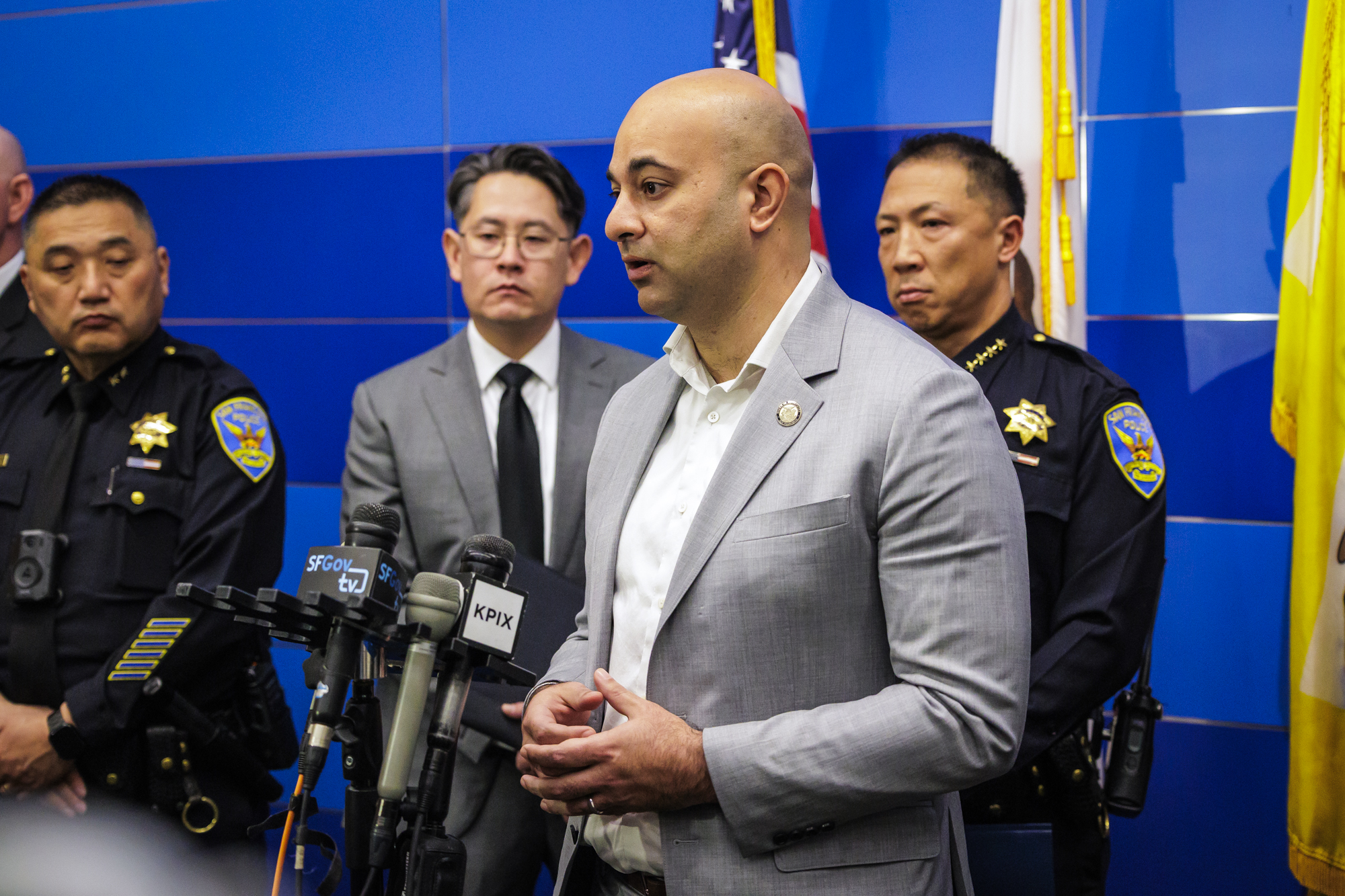 San Francisco Supervisor Bilal Mahmood addresses the press at SFPD Headquarters in San Francisco on Feb. 3, 2026. (Martin do Nascimento/KQED) San Francisco Supervisor Bilal Mahmood addresses the press at SFPD Headquarters in San Francisco on Feb. 3, 2026. (Martin do Nascimento/KQED)
“We’re a city that’s prone to earthquakes and fires. That could have been much worse,” Supervisor Bilal Mahmood said.
The city’s director of the Department of Emergency Management, Mary Ellen Carroll, said that despite how many residents were impacted, “this was a relatively small event for the larger population of San Francisco. But even on a relatively smaller type event, the impacts were significant.”
Moving forward, she said, “We need better coordination and communication with PG&E as the energy provider and the city … Within PG&E, there was issues of communication within the organization.”
Mahmood is sponsoring a separate hearing with PG&E, set to take place on March 2 at the Land Use and Transportation Committee.
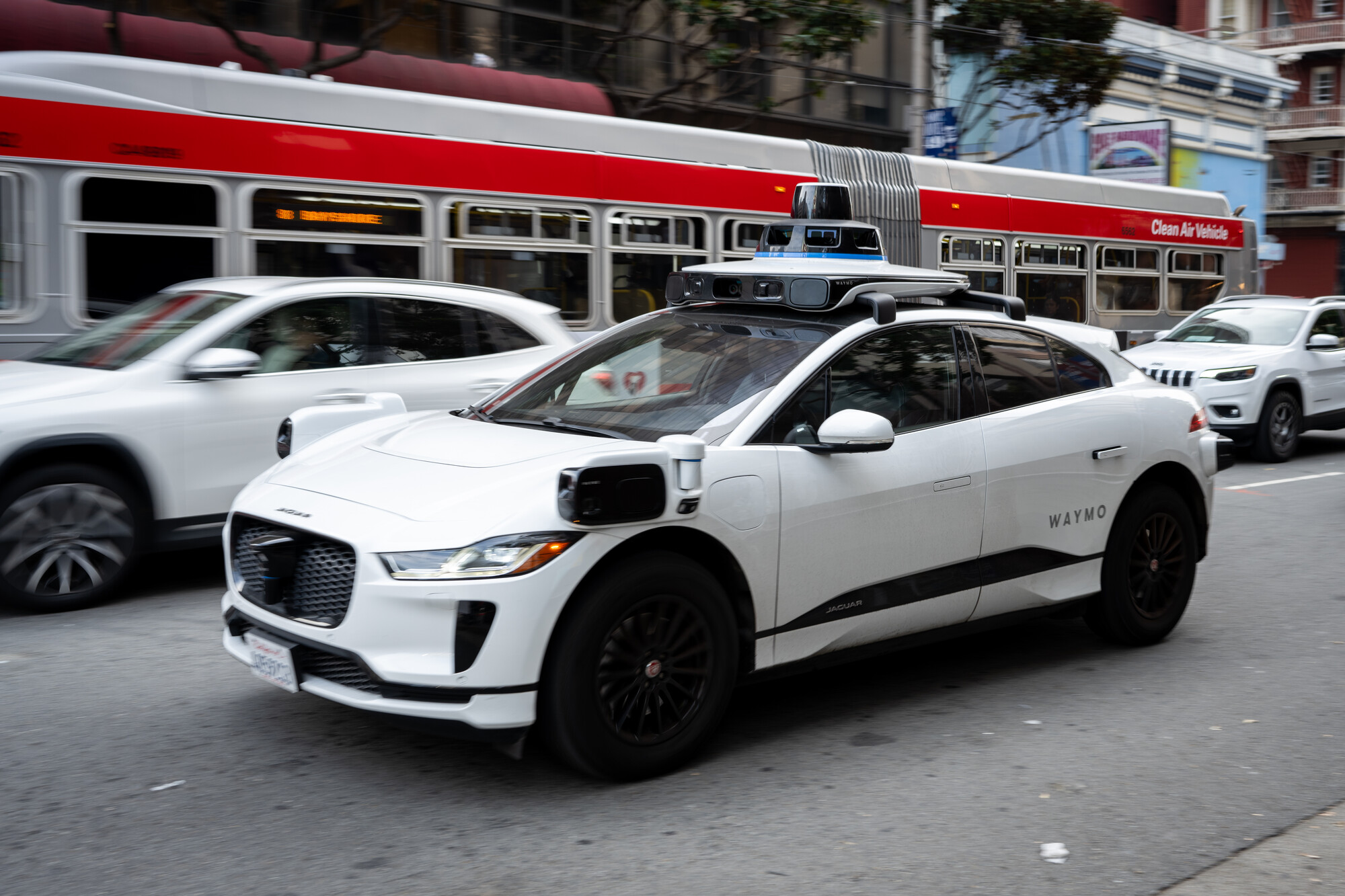 A Waymo driverless taxi drives through Downtown San Francisco, California, on Nov. 2, 2023. (Carlos Avila Gonzalez/SF Chronicle ) A Waymo driverless taxi drives through Downtown San Francisco, California, on Nov. 2, 2023. (Carlos Avila Gonzalez/SF Chronicle )
That hearing will focus on robotaxis, such as Waymos, which stalled in the street and caused traffic jams blocking public safety responders during the December power outages.
“This wasn’t just one of those outages where the most difficult consequence is resetting your alarm clock. This was an emergency citywide,” Mahmood said during Thursday’s hearing. “There was traffic chaos with Waymos struggling with the failing stoplights. Cell networks were unreliable.”
Wong said he’s aware of an additional planned power outage expected for next week.
“Now, we’re hearing about another planned outage next Tuesday, Feb. 17, on Lunar New Year,” he said at the hearing. “Another holiday, another disruption for our residents and small businesses.” |



.png)
 More
More
 Religion & Spirituality
 Education
 Arts and Design
 Health
 Fashion & Beauty
 Government & Organizations
 Kids & family
 Music
Music News & Politics
 Science & Medicine
 Society & Culture
 Sports & Recreation
 TV & Film
 Technology
 Philosophy
 Storytelling
 Horror and Paranomal
 True Crime
 Leisure
 Travel
 Fiction
 Crypto
 Marketing
 History
 Comedy
 Arts
Arts Games & Hobbies
 Business
 Motivation