|
Hundreds of flights through San Francisco and Oakland’s airports have been canceled ahead of the holiday weekend, after the Federal Aviation Administration ordered airlines to reduce air traffic by 10% across the country beginning Friday amid the ongoing government shutdown.
More than 700 flights out of both San Francisco International and Oakland San Francisco Bay International Friday have already been canceled, and another 1,100 at each are delayed, according to tracking software FlightAware. Hundreds more trips scheduled for Saturday have also been impacted.
Those numbers are likely to increase, as both United and American Airlines announced Thursday that they will nix 4% flights scheduled through the weekend ahead of Veterans’ Day.
The cancellations, which affect 40 major U.S. airports, will leave passengers across the country scrambling, as airports deal with air traffic control staffing shortages exacerbated by the lapse in federal funding. The cuts will also impact Los Angeles International Airport, along with major airports in New York, Washington D.C. and Philadelphia, according to the list obtained by the Associated Press.
“Those who travel will see that we’ve had more delays, we’ve had more cancellations,” U.S. Transportation Secretary Sean Duffy told reporters Wednesday. “We don’t want that, but our number one priority is to make sure when you travel, you travel safely.”
SFO, Oakland San Francisco Bay and San José Mineta International Airports all told KQED Thursday they hadn’t received any formal communication from the FAA about impacts at their sites.
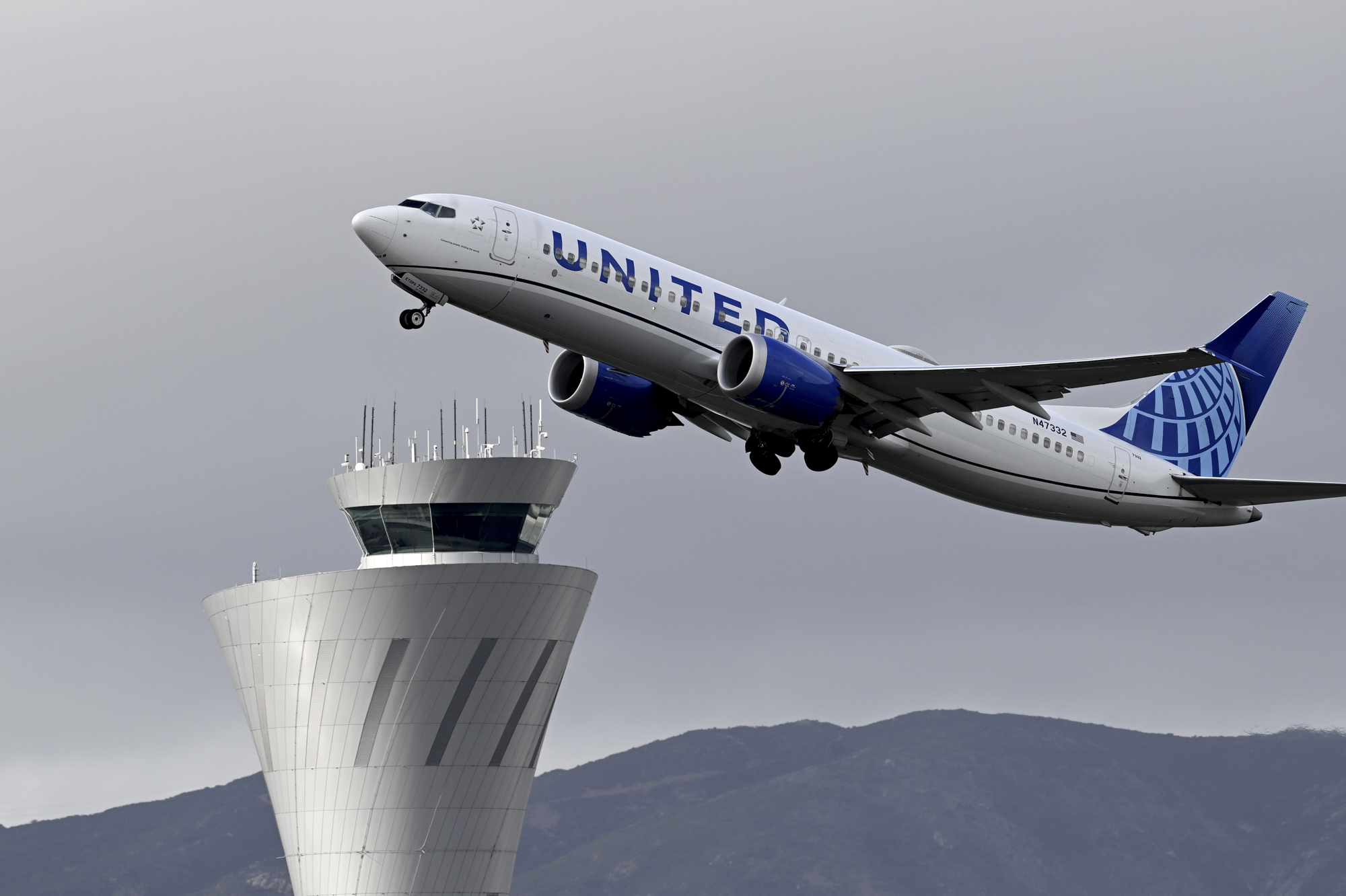 A United Airlines plane takeoff from the San Francisco International Airport (SFO) in San Francisco on November 5, 2025. (Tayfun Coskun/Anadolu via Getty Images) A United Airlines plane takeoff from the San Francisco International Airport (SFO) in San Francisco on November 5, 2025. (Tayfun Coskun/Anadolu via Getty Images)
Doug Yakel, SFO’s public information officer, said the order to reduce traffic will be handled individually by each airline and suggested passengers reach out to their carrier directly for more information.
Travelers at SFO Thursday were already receiving updates that their travel might be impacted. Howard Robinson, who’s flying to Jamaica to help his mom recover after Hurricane Melissa, received an email from American Airlines early Thursday warning that flights could be canceled as soon as Friday.
“We have one to Kingston on Saturday and we’re hoping it’s not one of the 10%,” he told KQED. “That’s from Miami Airport.”
While Robinson said he’s already avoiding layovers because of the increased chance of a delay or cancellation, he’s stopping in Miami to pick up his aunt and mother, who were able to leave Jamaica before the storm hit.
“Real life goes on, government shutdown or not,” he said. “I wonder if it’s worth it to affect all these people and change all these lives and have all this worry … I wish they would just figure it out and let us get on with our normal lives too.”
Other airlines have also confirmed that some of their flights could be impacted and announced looser cancellation and flight change policies while air traffic is reduced.
In a statement, Delta said it would provide additional flexibility to customers traveling through impacted markets to cancel or refund their flights, and was prioritizing international flights. United CEO Scott Kirby said the airline would also maintain hub-to-hub flights.
The shutdown has already led to flight delays and cancellations at a number of airports across the country, including SFO, as many of the specialized workers miss shifts or call out sick. Even before the shutdown, airports were facing a shortage of air traffic control workers, which Duffy said has now been exacerbated.
During the government shutdown in 2019 — which was the longest in history before this week — air travel disruptions were widely credited as the impetus to finally re-opening the government.
Not long after air traffic controllers coordinated a sickout in February 2019, temporarily pausing travel through LaGuardia and causing rippling delays at dozens of major airports, President Donald Trump backed a stopgap spending bill amid mounting pressure.
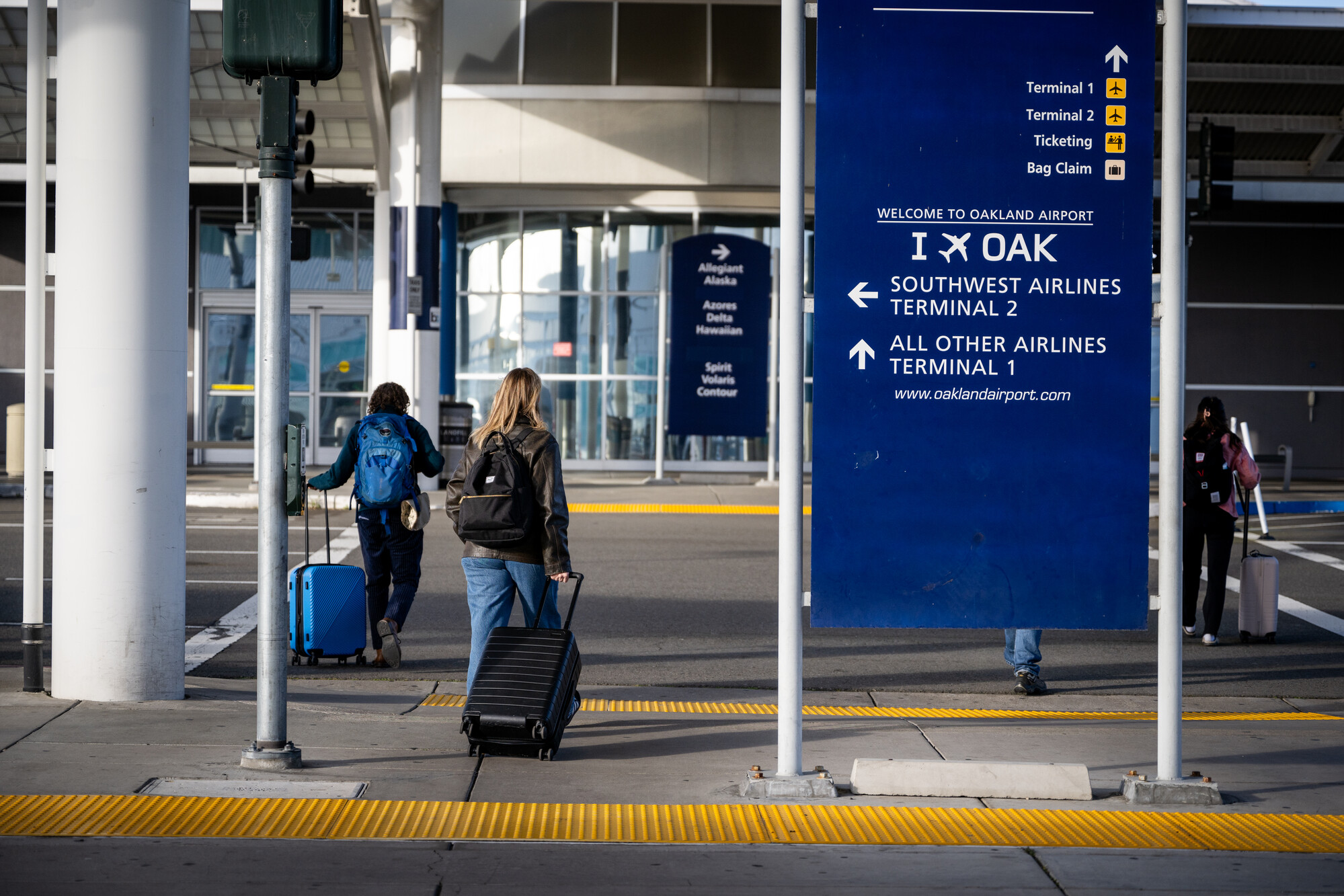 Passengers walk in to the Oakland International Airport in Oakland on April 12, 2024. (Beth LaBerge/KQED) Passengers walk in to the Oakland International Airport in Oakland on April 12, 2024. (Beth LaBerge/KQED)
It’s unclear how the air travel disruption will play out this time. So far, the Trump administration appears to be following the strategy it has employed since the beginning of the shutdown, blaming Democrats for withholding votes on a Republican-led spending plan in the Senate.
“I don’t have access to money to pay air traffic controllers during this shutdown. Congress has said there is no money. I’d love to pay them, but I can’t,” Duffy posted on X Thursday. “My message to Democrats is to sit down, figure it out, and not hold the American people hostage- especially when they want to travel.”
While Bay Area airports were largely spared from disruptions in 2019, in part because San Francisco’s security workers are not federal employees, some flights through SFO have already been canceled.
Even before the FAA order takes effect, Debbie Mizer’s trip to Dallas was among 160 delayed at SFO Thursday.
She’s trying to make a brief connection before her flight home to Bloomington, Indiana, after a month in the Bay Area, visiting her daughter and newborn baby.
She said when she came out here a month ago, she wasn’t as worried about flight impacts due to the shutdown.
“I didn’t know how it would be coming home,” she said, adding that regardless, she would have made the trip. “This is what family does.”
Mizer said she was staying positive, since her flight was only running an hour late. She said air traffic controllers working without pay and others with longer delays or cancelled flights are facing harder circumstances.
“I brought a good book and I’ll sit and read until the time comes,” she said. “Then they’ll delay it more and [I’ll have] been here for five hours — but I’m not looking at it that way.”
KQED’s Azul Dahlstrom-Eckman contributed to this report. |



.png)
 More
More
 Religion & Spirituality
 Education
 Arts and Design
 Health
 Fashion & Beauty
 Government & Organizations
 Kids & family
 Music
Music News & Politics
 Science & Medicine
 Society & Culture
 Sports & Recreation
 TV & Film
 Technology
 Philosophy
 Storytelling
 Horror and Paranomal
 True Crime
 Leisure
 Travel
 Fiction
 Crypto
 Marketing
 History
 Comedy
 Arts
Arts Games & Hobbies
 Business
 Motivation