|
Wedrell James has fond memories of San Francisco City Hall.
His father worked as a custodian in the building, and James remembers walking down the marbled halls with him, listening to stories about the workings of local government.
“So I have a great feeling about this place,” said James, 71. “My parents always voted, so it was just something I grew up with.”
James, a resident of the city’s Bayview neighborhood, returned to those same marbled halls on Thursday to cast his ballot in favor of California’s Proposition 50.
He characterized the ballot measure as a fight for the future of democracy itself.
“ They’re trying to steal our government from us. And if we don’t do something, we’re going to lose it,” James said.
Across the Bay Area and beyond, Californians will turn out Tuesday in the final day of voting in this statewide special election. At issue is Proposition 50, which would temporarily redraw current congressional maps in the state to favor Democrats.
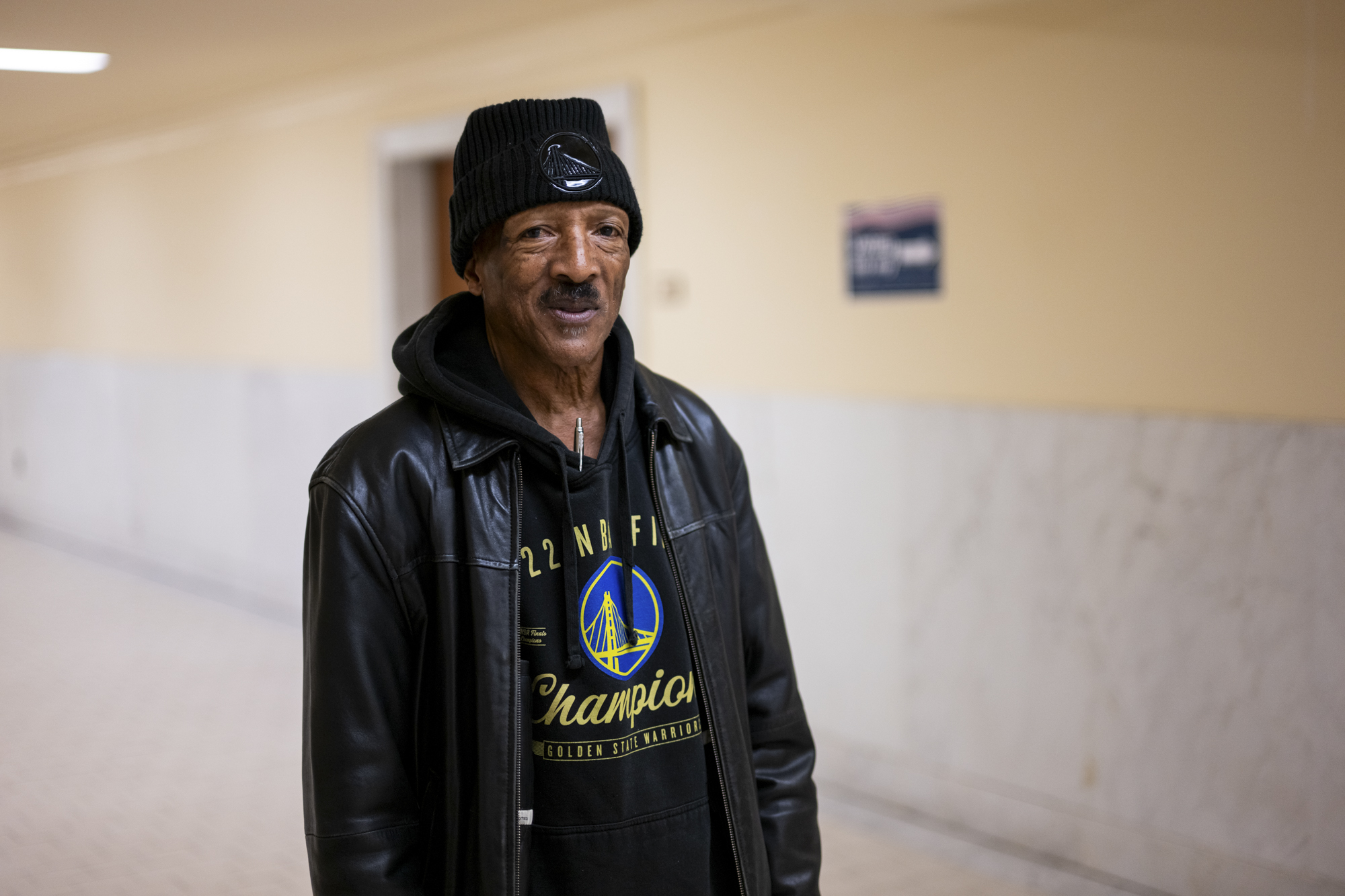 Wedrell James stands near the City Hall Voting Center in San Francisco on Oct. 30, 2025, after casting a ballot in the statewide special election. (Beth LaBerge/KQED) Wedrell James stands near the City Hall Voting Center in San Francisco on Oct. 30, 2025, after casting a ballot in the statewide special election. (Beth LaBerge/KQED)
The new maps would be in effect for the 2026, 2028 and 2030 House elections. Ordinarily, California’s redistricting is handled at the end of each decade by a nonpartisan, citizen-led commission.
State legislators moved to change that over the summer by putting Proposition 50 on the ballot after Texas Gov. Greg Abbot and lawmakers made good on a request from President Trump to redraw that state’s congressional maps to favor Republicans.
Jimmy Tran of Oakland, who works in the city, came to San Francisco City Hall on Thursday to drop off his mail-in ballot with a vote against the measure. Tran said he is opposed to gerrymandering in both Texas and California.
“ I think that’s wrong too if it’s happening in Texas,” Tran said. “Because if people in Texas are more [Democratic], then the state should represent that.”
Tran voted for President Donald Trump in the last election and said Proposition 50 will lead to less representation in California for Republicans like himself.
“ The people that I’m around, their views are more Republican, but I don’t think the [Legislature] in California represents that, and I think the [Legislature] of California should represent the people of California,” Tran said.
The ballot measure would move the boundaries of multiple congressional districts in the Bay Area. Over 100,000 voters in Antioch and Pittsburg would be shuffled out of the current 8th Congressional District, which includes other cities along the Carquinez Strait, into the 9th Congressional District, in an attempt to safeguard the seat of Rep. Josh Harder, a Central Valley Democrat seen as politically vulnerable.
Much of Sonoma County would be moved into the 1st Congressional District, an injection of Democratic voters that could unseat Rep. Doug LaMalfa, a Republican who represents a wide swath of northeastern California.
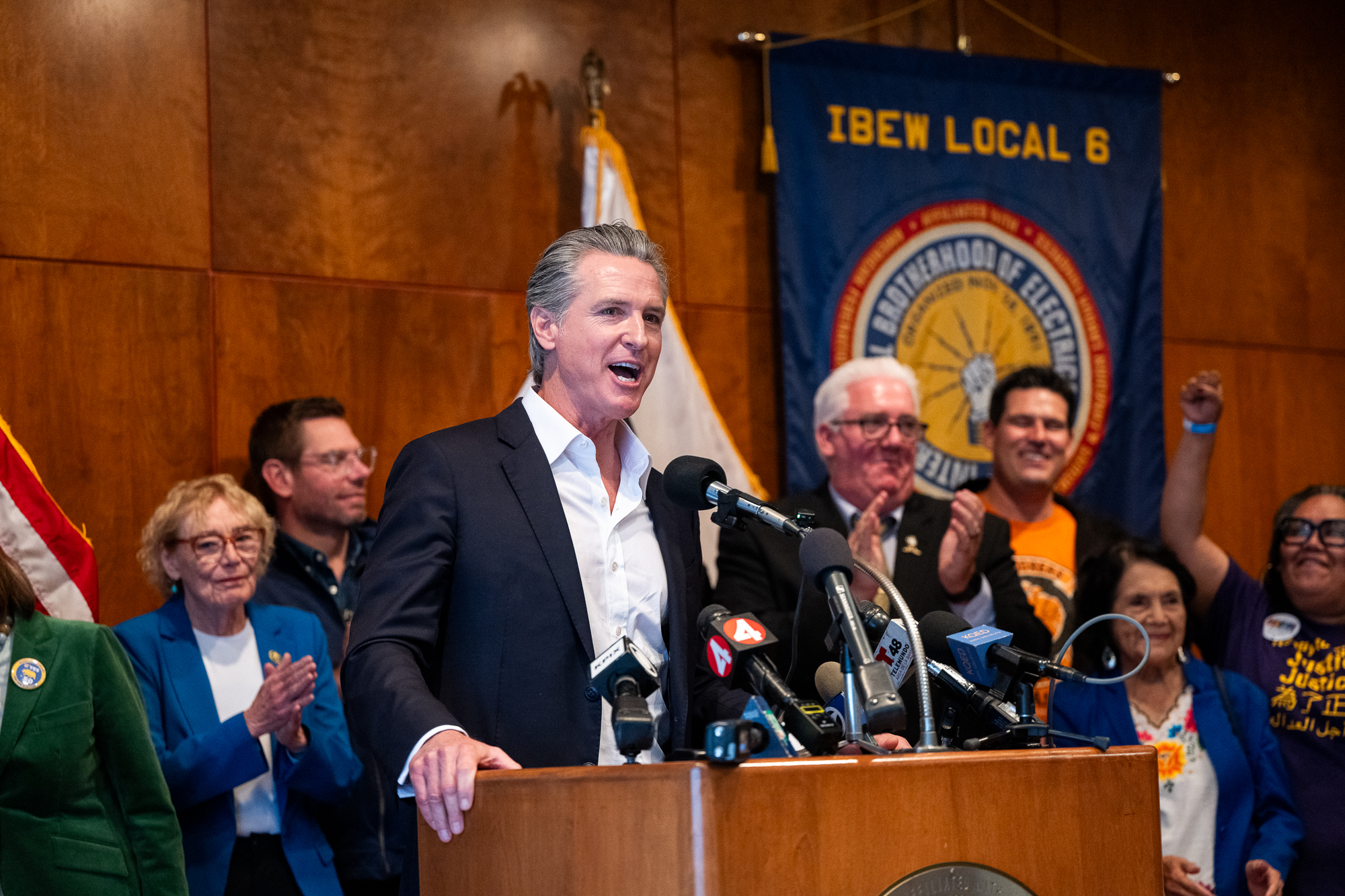 Gov. Gavin Newsom speaks at a rally in support of Proposition 50 at IBEW Local 6 in San Francisco on Nov. 3, 2025. (Beth LaBerge/KQED) Gov. Gavin Newsom speaks at a rally in support of Proposition 50 at IBEW Local 6 in San Francisco on Nov. 3, 2025. (Beth LaBerge/KQED)
Polls are indicating that Proposition 50 is likely to pass. Gov. Gavin Newsom has campaigned heavily in support of the measure, also known as the Election Rigging Response Act. Speaking on Monday at a get-out-the-vote event in San Francisco, he framed it as a way to fight back against the Trump administration.
“ People are on edge. Communities of color are on edge. Folks [are] scared to death to go out trick or treating, scared to walk their dogs, go to a playground, go to a loved one’s funeral because they might be disappeared on the basis of what they look like, where they congregate, the language they speak in the United States of America today,” Newsom said, referencing increased immigration enforcement by the Trump administration.
Former California Gov. Arnold Schwarzenegger has been a proponent of the nonpartisan redistricting commission since his time in office, when voters created the panel in 2008 to draw congressional districts based on the shared social or economic interests of communities, as opposed to political affiliation. He has campaigned against Proposition 50.
“There’s this war going on all over the United States: who can out-cheat the other one. Texas started it, they did something terribly wrong, and then all of a sudden, California says now we have to do something terribly wrong, and now other states are jumping in, and now it’s just spreading like wildfire all over the country. And the ones that are getting left behind are the people,” Schwarzenegger told CNN.
Some voters at San Francisco City Hall on Thursday expressed similar reluctance.
“ If the Democrats had put together a political and economic appeal that resonated with voters, then they wouldn’t need to be doing this,” said Mark Salomon, who lives in the city’s Mission District.
Salomon said Proposition 50 is a result of Democrats failing to focus on what voters want and losing the last election.
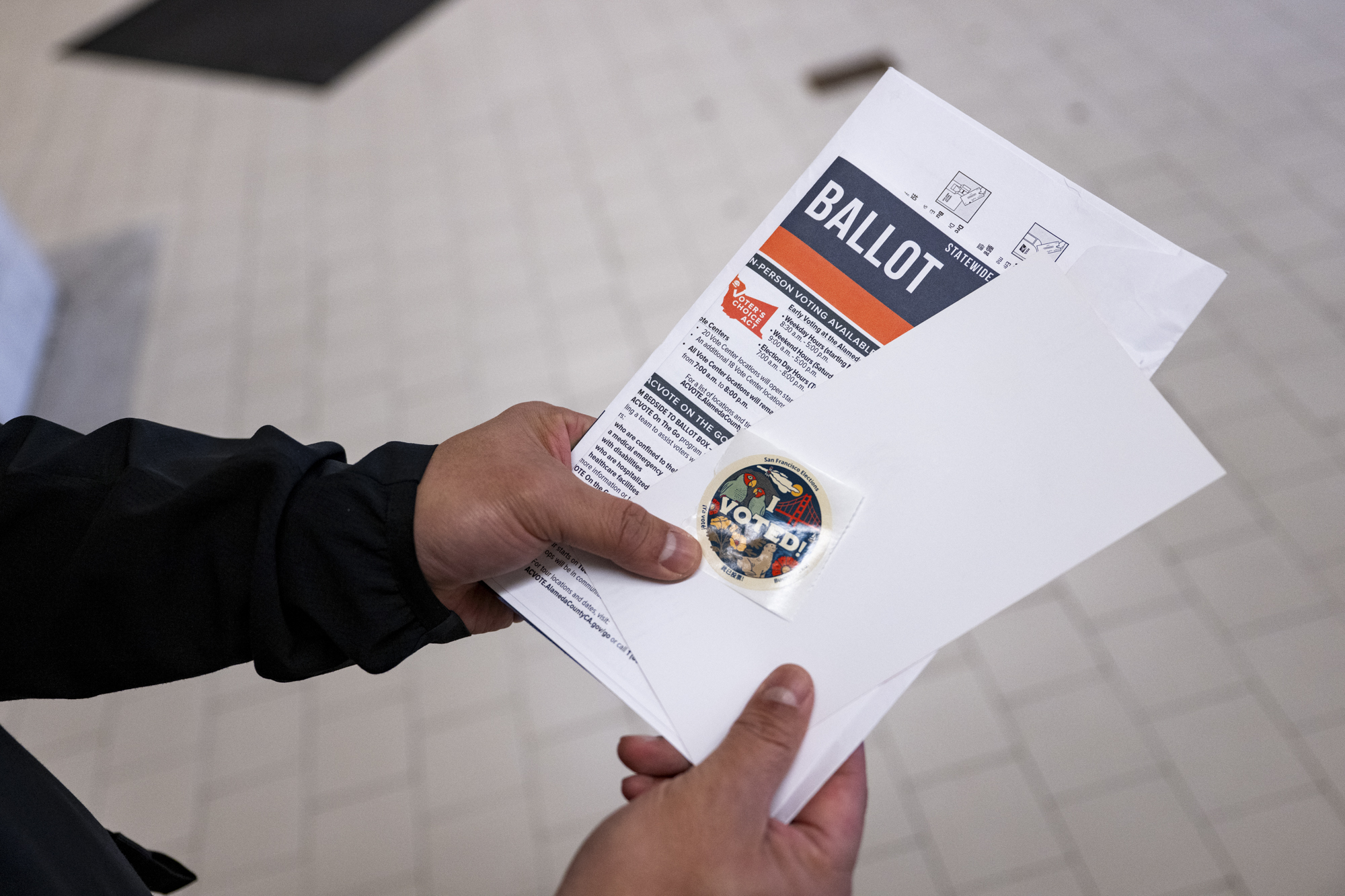 Alameda County voter Jimmy Tran drops off a ballot at City Hall in San Francisco on Oct. 30, 2025, ahead of the statewide special election. (Beth LaBerge/KQED) Alameda County voter Jimmy Tran drops off a ballot at City Hall in San Francisco on Oct. 30, 2025, ahead of the statewide special election. (Beth LaBerge/KQED)
“ So instead of coming forth with a political program on Medicare for all, expanding social security, education and housing issues, they’ve got nothing. So instead they have to rig the game to fight a guy who’s rigging the game,” Salomon said.
Others, like Shidume Lozada, had no misgivings about voting yes on 50.
“ I feel like extreme measures need to be taken right now,” Lozada said. “I feel like the Republican Party is playing extremely dirty. It’s beyond un-American. So if this is what needs to happen, then this is what needs to happen.”
KQED’s Marisa Lagos contributed to this report. |



.png)
 More
More
 Religion & Spirituality
 Education
 Arts and Design
 Health
 Fashion & Beauty
 Government & Organizations
 Kids & family
 Music
Music News & Politics
 Science & Medicine
 Society & Culture
 Sports & Recreation
 TV & Film
 Technology
 Philosophy
 Storytelling
 Horror and Paranomal
 True Crime
 Leisure
 Travel
 Fiction
 Crypto
 Marketing
 History
 Comedy
 Arts
Arts Games & Hobbies
 Business
 Motivation