|
Description:
|
|
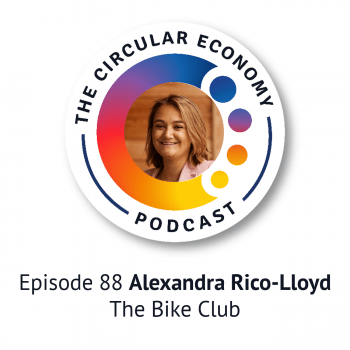
Alexandra Rico-Lloyd is one of the UK’s circular economy entrepreneurs, and is passionate about inspiring the next generation to get active and outdoors.
Alexandra says there are over 12.5 million unused kids bikes, just in the UK. That spurred her on to create Bike Club back in 2016, to provide a better way to cycle; better for the environment, better for parents and their children.
Bike Club has revolutionised the traditional model of ownership, aiming to change family cycling forever. It’s had over $40million of funding and reached 40,000 cyclists so far, and Bike Club says that makes it the largest micro mobility network in the UK – larger than Uber and Santander Cycles (what we used to call Boris Bikes).
Alexandra, who was recently listed in the Forbes 30 Under 30 list, shares the story of how the Bike Club grew from a self-funded ‘minimum viable proposition’, with a few bikes packed into an attic spare room. She explains how it’s delivering deeper levels of value for customers, and how its collaboration with one of the UK’s leading retailers has opened up its next development phase.
Podcast host Catherine Weetman is a circular economy business advisor, workshop facilitator, speaker and writer. Her award-winning book: A Circular Economy Handbook: How to Build a More Resilient, Competitive and Sustainable Business includes lots of practical examples and tips on getting started. Catherine founded Rethink Global in 2013, to help businesses use circular, sustainable approaches to build a better business (and a better world).
Stay in touch for free insights and updates…
Read on for a summary of the podcast and links to the people, organisations and other resources we mention.
You can subscribe to the podcast series on iTunes, Google Podcasts, PlayerFM, Spotify, TuneIn, or search for “circular economy” in your favourite podcast app. Stay in touch to get free insights and updates, direct to your inbox…
Don’t forget, you can use our interactive, searchable podcast index to find episodes by sector, by region or by circular strategy. Plus, there is now a regular Circular Economy Podcast newsletter, so you get the latest episode show notes, links and transcript delivered to your inbox on Sunday morning, each fortnight. The newsletter includes a link to the episode page on our website, with an audio player. You can subscribe by clicking this link to update your preferences.
Links we mention in the episode:
About Alexandra Rico-Lloyd
Alexandra Rico-Lloyd is one of the UK’s leading circular economy entrepreneurs, passionate about inspiring the next generation to get active and outdoors. She has been recognised through various awards, most recently being listed in the Forbes 30 Under 30.
There are over 12.5 million unused kids bikes in the UK alone. That’s why she created Bike Club back in 2016. A better way to cycle; better for the environment, better for parents and better for children.
Bike Club have revolutionised the traditional model of ownership, changing family cycling forever. With over $40million of funding and 40,000 cyclists they are now the largest micro mobility network in the UK – larger than Uber and Santander Cycles.
Interview Transcript
Provided by AI – add 2:25 mins for the finished episode
Catherine Weetman 00:00
Alexandra, welcome to the circular economy podcast.
Alexandra Rico-Lloyd 00:03
Thank you very much for having me.
Catherine Weetman 00:06
I’m really keen to understand more about the backstory behind the bike club and all the developments along the way. But maybe we could start with what sparked the idea in the first place, and why you thought it could work.
Alexandra Rico-Lloyd 00:20
Ah, yes. So, I guess it was really born out of a lot of cycling. So myself and my co founder were really keen cyclists. And we wanted to get more children’s cycling. And then obviously, lightweight bikes are very important. But they’re also very expensive. And so for a parent that makes cycling or good quality cycling, quite inaccessible. My co founders working in consumer finance. And so I guess he in a way we bought those, we managed to apply consumer finance to kids bikes, and, and so comes Bike Club, where you pay monthly in exchange as they grow.
Catherine Weetman 01:09
And just to make it clear about lightweight bikes. For those people who perhaps haven’t had to buy kids bikes, we’re not talking about super lightweight racing bikes – what’s that cycling phrase? Strong, light, cheap, pick any two. So as bikes have become cheaper, they still need to be strong, but they’ve just become really heavy, because that’s, that’s a lot cheaper to do. And I’ve picked up kids bikes before, and thought, I wouldn’t fancy paddle pedalling this up a hill. So I don’t know how I sort of, you know, six, seven year olds going to do it?
Alexandra Rico-Lloyd 02:03
Yes, exactly. Like if, if an adult struggles to pick a bike up, how would you expect the child to enjoy? Why didn’t that piece
Catherine Weetman 02:11
of equipment? Exactly. So it’s all about kind of making it enjoyable and giving them something that’s fit for purpose. So when we talked before, you were telling me how you kind of got going with a minimum viable product? So could you unpack that a bit for for people, because I think it’s really interesting, the, you know, often starting a new business can seem absolutely overwhelming. So how do you do that without suddenly having to find hundreds of 1000s of pounds in capital, and so on.
Alexandra Rico-Lloyd 02:43
So I capital wires, we started with some savings. And we bought a few bikes. I think the first batch we bought 10, bikes, and listed them on the websites or obviously built a website as well listed them on the website. And slowly, they all sold, or they all got rented. And at that point, we then bought like a bike every time someone ordered. So we just grew the fleet like that. We took out loans, we re mortgaged anything we could do to find a bit more money to buy some more kids bikes. I think everyone thought that we were crazy. At one point we had, like 30 children’s bikes stacked up in our two bed flat, three floors up in an attic. And I don’t like thinking back. I don’t think we realise we truly realised what we were building. But it was exciting. And it was fun. And and it grew. And that’s really cool.
Catherine Weetman 03:59
Did it grow mainly through word of mouth? Or were you doing lots of marketing?
Alexandra Rico-Lloyd 04:05
We were doing quite a bit of digital marketing. So we were targeting people through Facebook. And then I think obviously, word of mouth helped an awful lot. That we’re all kind of first, our first customers. They were early adopters, to kind of new business models generally. But they were also really keen cyclists. And they really understood the loop. I guess in a way they understood what we were trying to do. They understood the importance of the lightweight bike and they were interested in the environment and sustainability as well. And so those like some of those early members of us, they are our biggest fans today. And actually one of our first 10 members is an investor in in Bike Club and yeah, that they’re their fans. And then Now, I guess what once we kind of slowly started moving away from that quite niche customer, that’s when we were able to really make an impact on families that wouldn’t get cycling otherwise. But we wouldn’t have been able to target those customers or members we call them unless, unless we’d grown the bike club and we grew the bike club through those, those fans and those those people that kind of really, really understand the model.
Catherine Weetman 05:34
Yeah, that’s interesting that you kind of started with people who, perhaps were almost already on board and just looking for something that would fill that gap. But now you’re moving into the more mainstream market. So maybe you could talk a little bit about what the offer includes, you know, what, what are the age ranges of bikes that you that you provide? How does it work from a customer point of view.
Alexandra Rico-Lloyd 06:03
So, we we offer bikes, from note, but I mean, no one gets the baby cycling the bike, but you can theoretically put a child on a balanced bike as soon as they can walk. And it’s actually really useful just to have them kind of hanging around, so that they get familiar with, with the bike. And it’s not such a daunting piece of equipment, when they do come to ride it. And they kind of naturally play around with it, they look at the handlebars, they might try and get in on it and and that’s that’s how they get started. That’s that’s the kind of, that’s the best way to teach a child to ride by making it fun for them. So we accommodate naught of 11 to 13. Kind of when when they go through that massive growth spurt and become an adult. That’s that’s when they move on to the the bigger bikes, but we do have like teen bikes, so to speak.
Catherine Weetman 07:06
Right? So you’ve got those as well. And then you you lease them or rent them to customers. How does how does that work?
Alexandra Rico-Lloyd 07:13
Yeah, so as a as a parents, you know, your bike for your child. And you know that they’re going to grow, but you don’t know exactly when they’re going to grow. I think that’s the biggest pain points sometimes for parents is that, yes, they might have just gone through a growth spurt, but there might be an arm around the corner. And so you come to bite club, because you want to get a bike for them. And you go on the website and you order a bike, we’ve got a nice bike finder. So you can input their details, and we’re telling you the perfect bike for them. And a few days later, you’ll have a bike turn up at your door. So we deliver, you don’t need to come and collect, we will deliver to you. And you enjoy the bike and you’ll pay monthly and then when you come to exchange, you’re basically go through that same process, input, the details will tell you what bike to exchange do. And then they get a new bike to the door and we take the Courier takes away the old one, it’s it’s really it’s really as simple as that doorstep exchange?
Catherine Weetman 08:28
And did the bikes come back in reasonable condition? You know, as you would expect, if somebody owned the bike and sold it or, you know, is that a bit of a risk for you?
Alexandra Rico-Lloyd 08:41
So if you go back to the start, and I know a lot of the conversations you have are around how people get into the circular economy. I think that’s one of the biggest fears that people have. What condition is it going to come back in? Is it going to you know, is it going to be ruined? Is this actually a viable business model? And we have the same concerns, I guess, when we started. But what we found, after a period of time is that the bikes came back in relatively good condition. Yes, there’s fair wear and tear. But there’s nothing that’s nothing that our mechanics can’t fix. And what what is really nice is that because those bikes come back to us fairly often and fairly regularly, and they’re fully serviced by our mechanics. Those bikes are actually been really well looked after. And as a result, their lifespan increases because they’re not sat for years rotting away in a shed. They’re actually kind of being well used, well looked after, and well refurbished. It’s also a bit of a concern for customers themselves. So members will regularly be a bit worried like, you’re going to charge me for this. And as much as we tell them look, don’t worry, we don’t usually charge much. It’s fine. We it’s that normal wear and tear, it’s it’s still, it is still a concern for a lot of families that they might get charged, there will be, it’s too good to be true, there’ll be some hidden fees somewhere. And so what we do offer is we offer Bike Club plus, which is insurance to give you peace of mind. And it’s an extra kind of small payment per month, I think it’s two pounds per month. And that just gives you peace of mind that all charges or all fees will be kind of covered. When you return the bike to us. There are some bikes that come back particularly damaged. I actually love it when a bike comes back really dirty, because you can tell that they’ve had a lot of fun. But the funniest, the funniest damage story, I guess, of mine is when a bike came back and the saddle had clearly been eaten by a dog. So yes, obviously we do still get damage. But it’s not it’s not that often.
Catherine Weetman 11:02
Yeah, I guess people have gotten got the car rental stories in mind that you read in the weekend papers about, you know how somebody didn’t take didn’t take photographs of every single inch of of the car, and then got billed with something that they’re certain wasn’t damaged when they sent it back. So what else is different about the bike club versus buying a bike?
Alexandra Rico-Lloyd 11:30
I think so one thing that I mean I care quite passionately about is the fact that we’ve really moved into this family cycling space that was never really never really kind of looked at before. And so as a parent, if you go to get your child a bike, you will either go to a local bike shop, or you will end up at Whole Foods. And then you will end up talking to either a bike enthusiast who actually doesn’t really care that much about children’s bikes, he cares about the adult bikes that he’s riding on the weekends. So you’ll end up talking to the bike enthusiast, or you’ll end up and that’s quite intimidating. Or you’ll end up talking to someone who’s got that as a Saturday job. And actually, they don’t have a clue about biking, they probably can’t ride one themselves. And so that’s either really intimidating, or really useless. And as a parent, what you really need is you need someone that understands kids bikes, understands family cycling, and is able to give you a little bit of advice on the kind of increase in their confidence or how to get started. How often are they going to need a new bike, all the all those all these questions that you have, specifically as a parent. And that’s what we found, we were able to offer, we weren’t just offering bikes on subscription, we were able to offer like a real service to our members. Because that’s all that’s all we do. And so everyone that works for us, everyone that you talk to cares about getting children and families cycling in and outdoors. And that’s been really special that we’ve been able to offer that to people.
Catherine Weetman 13:25
Yeah, that sounds like a really good way to get people over those those hurdles. And, yeah, I can imagine that that is a real bonus for people and, you know, particularly helps the kids to get something that’s going to work for them as well. So you’ve grown relatively quickly. And then came a big development with John Lewis.
Alexandra Rico-Lloyd 14:21
Yes, so that’s probably a year ago now. Actually, we took a took some space in John Lewis for Christmas last year. So that was a three month trial for the festive season. And John Lewis, I think what they’re doing with the circular economy is is really is really nice and really interesting that they’re really supporting businesses like ours, and they want to make business more sustainable, I guess. And so they’re really looking for opportunities to partner with others. businesses. But what they were also doing is they had kind of redone the Stratford store. And they were looking to kind of make it a little bit more experiential. And that’s where putting bikes in the stores that’s quite attractive. And I really, I really liked that idea that our members are now able to go into a store and touch and feel a bike and the children is able, the child is able to kind of just get on that bike and just pedal on rollers. And that’s, that’s really fun, like seeing that in action is really, really fun. And I love that. I love that we’ve kind of put cycling into a new space. Children’s bikes were not in department stores before, but they are now. And I think it really makes sense. Because as a parent, when you go to get a cot or a pram for your newborn baby, you will more often than not go to John Lewis, you’ll go to the nursery department because you’re you know that you’re going to find someone that is able to give you a lot of advice on what cost or what car seat is going to be best for you. And so it makes sense that the natural next step is when your child is slightly older, you go into John Lewis to get advice on how to get them cycling.
Catherine Weetman 16:27
Yeah, it’s definitely seen as a place where you can get lots of useful advice, that’s not all about selling either. The next thing. So I think those kind of, you know, the the ethos of, of the, of the store, and the company is it fits really well doesn’t it with circular economy and doing things in in different ways that offer more value to customers? And so, you know, has that really fueled growth in subscriptions and so on being being in John Lewis, and what’s happened since then have you had to kind of scale to another level?
Alexandra Rico-Lloyd 17:13
That’s a really interesting question that because I guess, in a way, that was always that was part of our marketing plan, right? So it wasn’t it, it wasn’t this kind of overnight success thing with suddenly loads and loads of orders, like Domino’s never did that for us. But for us, it was it. It’s revolutionary to have kids bikes in department stores. And so there was obviously an element of that it wasn’t pure marketing. It wasn’t a pure marketing ploy for us, like it made a lot of sense. But also, it’s really increased awareness and credibility, just by partnering with John Lewis, and have had t |



.png)
 More
More
 Religion & Spirituality
 Education
 Arts and Design
 Health
 Fashion & Beauty
 Government & Organizations
 Kids & family
 Music
Music News & Politics
 Science & Medicine
 Society & Culture
 Sports & Recreation
 TV & Film
 Technology
 Philosophy
 Storytelling
 Horror and Paranomal
 True Crime
 Leisure
 Travel
 Fiction
 Crypto
 Marketing
 History
 Comedy
 Arts
Arts Games & Hobbies
 Business
 Motivation