|
Description:
|
|
IT’S EPISODE 69, and I’m talking to Jo Godden of RubyMoon. Jo was one of my first podcast guests, and now she is back to tell us about an exciting new project to create properly recycled textiles to close the loop on active wear.
RubyMoon, based in Brighton in the UK, is already using recycled fibres from Ocean Plastics to make its active wear products, and now wants to go further through research projects that overcome the technical challenges of recovering and recycling the kind of textiles commonly used in swimwear.
Jo explains that this project focuses on two key fabric elements, Nylon 6 – a strong, durable polyamide, and Elastane, that makes the fabric stretchy so it fits well and supports activites like swimming and other sports.
The challenge is how to find mechanical and chemical methods of breaking down polyamide elastane, that are both cost-effective and environmentally sound.
There’s a second ambitious project too, developing a nano trace to embed into the material so that it can be identified and recovered, to make sure it goes back into the closed loop system.
Podcast host Catherine Weetman is a circular economy business advisor, workshop facilitator, speaker and writer. Her award-winning book: A Circular Economy Handbook: How to Build a More Resilient, Competitive and Sustainable Business includes lots of practical examples and tips on getting started. Catherine founded Rethink Global in 2013, to help businesses use circular, sustainable approaches to build a better business (and a better world).
Stay in touch for free insights and updates…
Read on for a summary of the podcast and links to the people, organisations and other resources we mention.
You can subscribe to the podcast series on iTunes, Google Podcasts, PlayerFM, Spotify, TuneIn, or search for “circular economy” in your favourite podcast app. Stay in touch to get free insights and updates, direct to your inbox…
Don’t forget, you can use our interactive, searchable podcast index to find episodes by sector, by region or by circular strategy. Plus, there is now a regular Circular Economy Podcast newsletter, so you get the latest episode show notes, links and transcript delivered to your inbox on Sunday morning, each fortnight. The newsletter includes a link to the episode page on our website, with an audio player. You can subscribe by clicking this link to update your preferences.
Links we mention in the episode:
About Jo Godden
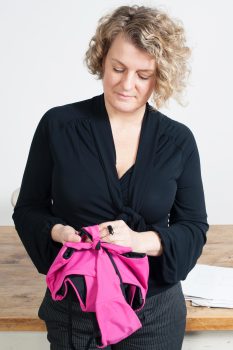 Jo Godden is an ethical swimwear and activewear specialist, mother and activist. Jo Godden is an ethical swimwear and activewear specialist, mother and activist.
After 25 years working in the unsustainable fashion industry, Jo decided to be part of the solution. In 2010 she founded RubyMoon which combines the industry’s substantial potential to positively impact the social and environmental state of our planet, with the knowledge that women and innovation are key to a better future.
RubyMoon created a ‘Circle Of Impact’ long before the term ‘circular economy’ was used- and is now spearheading R&D initiatives into synthetic textile upcycling in order to ‘close the loop’ on used swim and activewear,
Jo is committed to activate women’s potential and elevate their status in communities where they often don’t have a voice. Investing in microfinance enables females to drive development and progress.
Jo is a natural ‘connector’ and a mentor for social enterprises and creative individuals who want to make their mark on the world.
Interview Transcript
Provided by AI – deduct ~45 secs for the finished episode
Catherine Weetman 03:04
Jo Godden is an ethical swimwear and active wear specialist mother and activist. After 25 years working in the unsustainable fashion industry, Jo decided to be part of the solution in 2010, believing that women and innovation are the keys to a better future, she founded Ruby Moon to improve the social and environmental state of our planet. Ruby Moon created its circle of impact, and is now spearheading r&d initiatives into synthetic type textile upcycling. In order to close a loop on used swim and active wear. Jo is committed to activate women’s potential and elevate their status in communities where they don’t often have a voice, including investing in microphones that enables females to drive development and progress. Jo is a natural connector, and a mentor for social enterprises and creative individuals who want to make their mark on the world. Jo, welcome back to the circular economy podcast.
Jo Godden 04:04
Thank you. Nice to be here.
Catherine Weetman 04:06
Yeah, it’s great to see you again. And for those who didn’t catch our discussion way back in episode four. Could you start by giving us a quick overview of RubyMoon, and how it’s evolved over the last couple of years?
Jo Godden 04:19
Yeah, certainly. So we’re still engaged with our circle of impact. That’s the barometer we use to measure how we’re doing every year. We’ve still investing heavily all our profits into women entrepreneurs. So we’ve moved closer to 2500 women now rather than 2000 or less that we had when I spoke to you two years ago. And actually during COVID, it gave us time to sit down, and think about how we could actually become even more circular. So we developed a membership plan during that time. And also, we have continued on our r&d, which is what I’d like to talk to you about today. So, since we last spoke, which was I think, about two years ago, 200 billion garments have been manufactured around the world. That’s an incredible amount of textiles, virgin production of textiles. And we have been motivated to focus a lot of our time now on closing the loop on material waste, particularly textiles. And in November, we are starting our new r&d programmes with Queen Mary’s University London and Leeds University.
Catherine Weetman 06:23
Right, that sounds interesting, and we’re going to dig into that in more detail. But for those who didn’t hear the first episode, can you explain a bit more about the textile fibres you currently use? Because you’re using fibres from ocean plastics and so on? And the issues with with those fibres, and the other fibres used in the wider swimwear industry? So to kind of tell us a bit more about what what’s in our clothes, or not, not clothes, generally, but swimwear?
Jo Godden 06:54
Sure, so as listeners may or may not know, swimwear, inactive wear is generally made from synthetic fibres. And the reason for that is they do not retain water. So it’s very important that either your sweat, or the actual water that you’re swimming in isn’t retained in the garment. Otherwise, you would be heavily weighted down with that material as you exercise or swim. And we use nylon six. So that’s polyamide yarn made from fishing nets, and carpets and other nylon waste. So polyamide is typically called nylon. And one of those is called nylon six. It was developed actually, as a substitute for silk during the Second World War, because it was difficult to get silk and they needed something to make parachutes from. So that’s the origin of nylon. And it’s really fantastically strong material as you can imagine, to be used for parachutes, etc. Now, all fabric, as I mentioned, our our our material is already recycled, was actually upcycled is the correct term. And we want to keep that material in the system as long as possible, because as I mentioned, it’s really strong and completely fit for purpose. Now, the problem with it, although it’s not really a problem, the search is that it does not biodegrade. In other words, it never breaks down. It’s a polymer, so technically a plastic. But if we think about the important aspects of the circular economy, it’s all about durability, and rewear. So those are the fundamentals of the circular Circular Economy feet, thinking. Now I’m not a chemist, but my understanding is that the amide part of the polyamide in the you know, the chemical chain, or the polymer chain is what gives it strength and why it’s so important to retain. The only problem is that we do not currently have the system in place to upcycle the material in the quantities that we need at scale. So therefore right now, all of those Swim, swim wear pieces and active wear pieces that are currently in use. They have to be disposed off their back typically that’s being buried or burnt, or unethically exported overseas.
Catherine Weetman 09:45
Wow. So it’s not even going into mixed textile recycling them.
Jo Godden 09:50
No. Wow. And in the UK, that’s 120,000 tonnes of polyamide a year. And that’s not even counting the other synthetics, including polyester, which is about four or five times as big.
Catherine Weetman 10:05
So you might not know the answer to this. But the first problem I’m seeing is, How on earth does that all get extracted from mix, textile recycling? Or doesn’t it really,
Jo Godden 10:19
we don’t have that system in place to make the most of recapturing this fat, these valuable resources.
Catherine Weetman 10:25
So basically, anything that might have polyamide in, or probably the other synthetics as well just ends up being classed as contaminated and unfit for textile recycling in the UK. And therefore is is either burnt or exported to somebody else who may or may not have the capabilities to do something with it. Wow,
Jo Godden 10:51
that’s exactly right. There are small scale, sort of using textiles, for filling materials of mattresses and things, but that’s very small scale. It’s not nothing’s being done on a proper industrial scale. And that’s not just in UK, but that’s globally. So as you can see, this is a really important initiative that we’ve got to get our heads around.
Catherine Weetman 11:16
So really the thinking about those mattress fillers and things like that, I’m guessing that’s more repurposing, so shredding and reusing the intact fibres not creating a new fibre for a new textile. So it’s
Jo Godden 11:33
absolutely okay. And that’s the holy grail of textile is how do we get those materials back into the system? Right, the most environmental and an economic way?
Catherine Weetman 11:46
Yeah, to keep them in, in use. Okay, so that brings us on to your exciting research and development project when so pick up, pick up that story for us and tell us what you’ve been doing over the last couple of years.
Jo Godden 12:03
So we’ve started our very first research and development project back in well, it’s only 2020. But it seems a long time ago now in order to break down nylon six, and the elastane part of stretch swimwear. Now the last name portion is the bit that bit that makes it stretch and fits you so wonderfully. But that’s what we have to remove in order to get back that strong polyamide material. And we’re doing that at Leeds University with a wonderful sustainable textile department. And the object is to find green methods to mechanically and chemically break down polyamide elastane it’s a challenge because it has as I mentioned earlier has to be cost efficient in both economic and environmental ways. And that is really the crux or challenge with circular economy initiatives. We have to redesign the system to make it cost efficient to reuse those valuable resources. So that’s the first project and that’s the first challenge. And the second piece of r&d is our work with Queen Mary’s University London, where we are starting to integrate nanoparticles into back into the polyamide fibre when when it’s responsibly extruded, to make it even stronger than it is as a recycled product. And we’re also looking to give or improve the thermal capacity of that material. The reason being is we want to keep swimmers warmer in cold water. So we want to make a superior material rather than just an A, a nylon, another nylon lycra fabric we wanted to have added benefits. And these are what we call smart textiles. And this is the way that we are moving forward not just in the recycling world also adding value making a high value product from low value waste.
Catherine Weetman 14:21
Yeah, and I can see because we read Don’t worry about the growing number of people who are seeing the benefits of cold water swimming and that’s increased during the lockdown. There’s a group near here that swim in the in the river Swale which is the fastest rising river in the UK because of the size of the of the watershed that that goes into it. I have not dipped my toe in. Well, I have I have paddled in the swale but I’ve certainly not swimming it. But I have been having one thing I started at the beginning of lockdown that I’ve been heard about on the TV was cold showers. So I’ve been doing that since the beginning of lockdown enough. And I’ve stuck with it. And I’ve managed, you know, all through one winter. And now Now we’re heading into the second one. But that feels a lot easier than then cold water swimming. But yeah, I can see I can see the, the benefits of of thermal properties for for swimwear. And you you, you talked about the Leeds University project, and you said it was a combination of mechanical and I missed what the second bit was, was mechanical and chemical recycling. Yes, yeah. Okay. So there must be some challenges around that. Because, you know, we read things about plastics recycling, particularly involving either paralysis or chemical recycling, whereby the inputs end up being nearly as bad as making the polymer or whatever in the first place. Have you been able to, to resolve some of those challenges?
Jo Godden 16:08
Not yet. That’s why we’re currently on part two of our r&d. We came across some challenges in part one, which is last year. So as you mentioned, in terms of resources, whether that’s economic or or chemical, we have to be sure that there’s the methods we’re using are greener and less less of a cost to the environment. I mean, people have broken down polyamides with elastane before, it’s not impossible, but if you’re using chemicals that then themselves are either too expensive, or are creating a byproduct that cannot then be reused, then that’s really defeating the whole object of what you’re trying to achieve. So what we’re looking at is green materials, which, obviously, there’s a lot more coming onto the market now. So we’re using new technology to be able to, to look at those, but we are going to be using some some chemicals as well that are not green, but we can be reused them over and over again. So, you know, we’re going to be doing some analysis of what’s the best way to best chemicals to use for this process.
Catherine Weetman 17:35
And I think there’s quite a lot happening in terms of chemical recycling, recycling. I know, there’s an EU project that’s been going for probably more than five years now called chemical leasing, with some big chemical companies involved in that. And they basically leased the performance of the chemicals to the user. And then the chemicals along with all the the wastes and residuals that are that are now contained in that go back to the chemical company, they clean it up, they might be able to even create valuable byproducts out of the impurities and get and then get it back into the system. So these kinds of closed loop systems can work really well. With value added for everybody in the in the process.
Jo Godden 18:24
Yeah, absolutely. I mean, technology, although it’s not, you know, the, the be all or end all of circular economy is a valuable, a valuable way to accelerate. You know, circular economy systems, really. And that itself is a circular economy system that’s been created. So yeah, absolutely wonderful, isn’t it?
Catherine Weetman 18:52
Yeah. I mean, if everything goes back to the producer, then it’s in their interests to make sure that they can get value out of it. Again, there’s no point in them recovering their original materials, and then having to dispose of it, because that just costs them money. Yes. So yeah, these kinds of partnerships can be really valuable. And have there been any, you know, big challenges that you can you can share along the way?
Jo Godden 19:24
Yeah, so we had a problem even with the mechanical side of pulling apart the textiles in the first place. Everything has been developed, in that sense for more traditional fibres such as wool and cotton. And so we are now developing our own mechanical machine for putting apart fibres that are synthetic because they need extra. It’s a different kind of machinery that we need because we’ve found that the synthetics were either melting against machinery, or they were getting caught up because of their different construction. So this is, you know, a huge learning process. And, you know, lots of people around the world working on this, it’s not just us. But you wouldn’t think that it will be different machinery, but it definitely is.
Catherine Weetman 20:28
Yeah. And I guess there are all sorts of learnings for the university teams there in terms of transference to other public policy.
Jo Godden 20:38
And actually, we’re working with one of our partners is a wall recycler. So he is looking, working with us, because not only does he you know, is the future about recycling wall or synthetics. It’s about recycling old textiles. So the machinery learning we’re doing at Leeds now is transferable again, across all textiles. And we wanted to develop a machine that we can use for different textiles. Because in the future, we’ve got our eye on creating circular textile hub.
Catherine Weetman 21:12
Right? Fantastic. Yeah. I’m just thinking about the some of the projects set up by UK Research and Investment, the circular economy hubs that they’ve got |



.png)
 More
More
 Religion & Spirituality
 Education
 Arts and Design
 Health
 Fashion & Beauty
 Government & Organizations
 Kids & family
 Music
Music News & Politics
 Science & Medicine
 Society & Culture
 Sports & Recreation
 TV & Film
 Technology
 Philosophy
 Storytelling
 Horror and Paranomal
 True Crime
 Leisure
 Travel
 Fiction
 Crypto
 Marketing
 History
 Comedy
 Arts
Arts Games & Hobbies
 Business
 Motivation