|
Description:
|
|
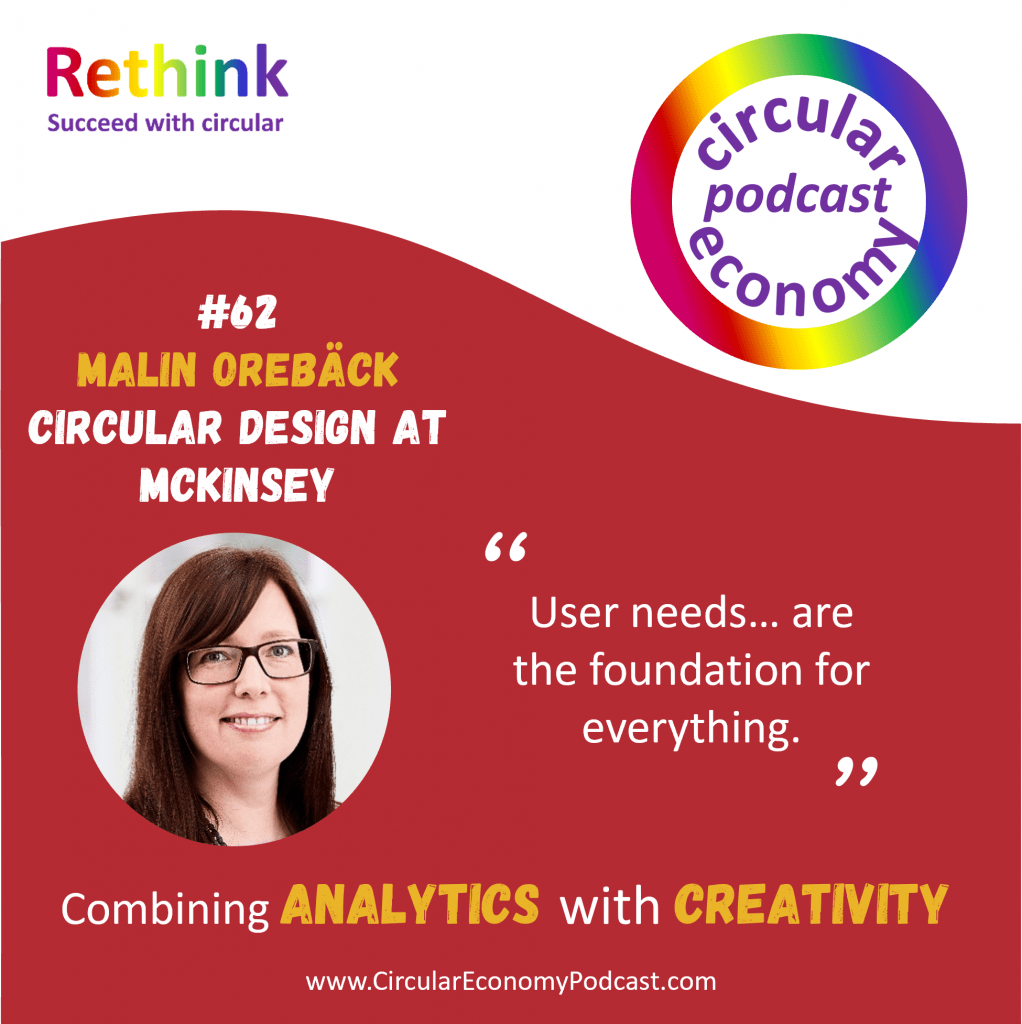
Catherine Weetman talks to Malin Orebäck, who leads McKinsey Design’s work in sustainability and circular economy. McKinsey Design is one of the world’s leading design agencies, and Malin shares a wide range of insights and gives us a masterclass introduction to circular design for products and services. Malin explains how she helps her clients get started with circular, and overcome linear ‘lock-in’.
Podcast host Catherine Weetman is a circular economy business advisor, workshop facilitator, speaker and writer. Her award-winning book: A Circular Economy Handbook: How to Build a More Resilient, Competitive and Sustainable Business includes lots of practical examples and tips on getting started. Catherine founded Rethink Global in 2013, to help businesses use circular, sustainable approaches to build a better business (and a better world).
Stay in touch for free insights and updates…
Read on for a summary of the podcast and links to the people, organisations and other resources we mention.
You can subscribe to the podcast series on iTunes, Google Podcasts, PlayerFM, Spotify, TuneIn, or search for “circular economy” in your favourite podcast app. Stay in touch to get free insights and updates, direct to your inbox…
Don’t forget, you can use our interactive, searchable podcast index to find episodes by sector, by region or by circular strategy. Plus, there is now a regular Circular Economy Podcast newsletter, so you get the latest episode show notes, links and transcript delivered to your inbox on Sunday morning, each fortnight. The newsletter includes a link to the episode page on our website, with an audio player. You can subscribe by clicking this link to update your preferences.
Links we mention in the episode:
About Malin Orebäck
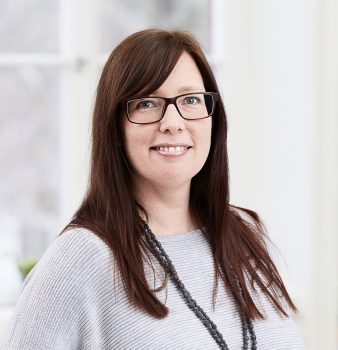 Malin Orebäck leads McKinsey Design’s work in sustainability and circular economy. Design strategist with 27+ years of consultancy experience leading global multidisciplinary teams. Member of McKinsey Design EMEA leadership team. Lecturer, keynote speaker and advisor to global brands on people driven innovation, design for sustainability and business model innovation. Malin Orebäck leads McKinsey Design’s work in sustainability and circular economy. Design strategist with 27+ years of consultancy experience leading global multidisciplinary teams. Member of McKinsey Design EMEA leadership team. Lecturer, keynote speaker and advisor to global brands on people driven innovation, design for sustainability and business model innovation.
McKinsey Design helps clients drive growth by delivering breakthrough products, services, customer experiences, and design-led innovation. We take a unique, multidisciplinary approach bringing top design talent from award-winning studios (like LUNAR, Veryday, and McKinsey Digital Labs) together with McKinsey & Company’s deep industry expertise. This combination of analytical rigor and breakthrough creativity helps clients across private, public, and social sectors innovate at scale and speed.
Interview Transcript
Provided by AI – add ~1:10 mins for the finished episode
Catherine Weetman 02:04
Malin, Welcome to the circular economy podcast.
Malin Orebäck Thank you.
Catherine Weetman
And first of all, I’d love to know more about your background while in and how you got into industrial design.
Malin Orebäck 02:26
So I have a long history in the design world. So I started out as a product designer almost 30 years ago, industrial designer, I have then moved through many different parts of the design world, and I’ve been working in design strategy, been working them as service design became a topic, then building after that capability when really in our studio, and bringing that as well lesson as an offered clients. And then moving on to work more with customer experience. And today, work fully on sustainability. And that have that as my my key topic. And a lot of that work that I do is connected to circular economy. So that’s really my, my focus.
Catherine Weetman 03:21
So Malin, that’s a really interesting background to how you got into design. And I’m curious to know more about what you do now these days at McKinsey.
Malin Orebäck 03:32
So having worked in my whole life as a design consultant, the last five years of my career has been within McKinsey. McKinsey being a management consultant, global management consultancy. And while many people may know about McKinsey, most people still don’t know that McKinsey is today also one of the world’s largest design agencies. So we have around 450 designers have multiple capabilities and profiles across the world in 17, different hubs and locations. So the way we are working now approaching this challenges around sustainability is that we’re combining, you know, analytics and this this rigour with innovation and creativity. And it’s really that mix that is needed to address these challenges, because we need to envision the future and we need to be able to build a really rigorous and solid, this this path towards that future in order to realise it. So I think for me, this is an incredibly exciting time to be at McKinsey and also leading design within and sustainability within McKinsey Design. So it’s amazing how much energy and effort is put into this space and the sustainability practice of McKinsey today is the fastest growing practice across our entire firm. And there is massive investment in knowledge build up and really to, to accelerate the impact that we can create, together with our clients across the world in this topic,
Catherine Weetman 05:26
that’s really encouraging to know. And, yeah, hopefully, it’s just going to go from strength to strength, as more companies realise that sustainability needs to be at the heart of your business strategy. It’s not an add on, it should inform everything that you do right along the value chain, obviously, the design of products and services, but also, you know, your financial model, how you do sales and marketing, absolutely everything, I think it’s going to be as transformational, in a circular economy particularly is going to be as transformation as digital was touching every part of the business. And so it’s not just not just a bolt on, is it?
Malin Orebäck 06:04
No, I completely agree. And I also think that companies today who are not looking into these dimensions are at risk, and will very soon be at risk, because of the big changes that are happening, the changes that are happening in legislation changes that are happening in, in the customer, consumer finance customers as themselves. So unless companies take this seriously, they are at risk.
Catherine Weetman 06:34
I agree, I agree. Does your career map across to how designers evolved generally over the over that time, from designing products to more more about services and experience and now into designing systems?
Malin Orebäck 06:50
So, yes, it does. I mean, when I started, it was very much focused on a much more narrow scope. So you were looking at the particular product, you were looking at a particular specific part of a system. And we would always work very closely with users to understand the user needs, and then design a solution that matched and met those user needs. That’s the foundation for everything. And it actually is the foundation still today of what you know, basically what designers are doing, we’re looking at the problem, we’re looking at what you know, the customer and the user needs. We’re working within the constraints of that given context. And we’re trying to come up with as many possible solutions to that problem as we can. That’s the process of design, and it still applies. And this applies equally well in circular economy today. So that’s the same. What has changed over time is that, as I was beginning to say, in the Initially, it was more about that isolated product. Today, it’s about designing the entire ecosystem. So we move from product design, to adding more abstract aspects or services, experiences to that, and sort of add the design thinking, theories and methodologies worked with that for a long time. But today, in order to address the challenges, we have to work with systems thinking, we need to look at the entire ecosystem, and how the product or the service or the experience actually fits into that system, we need to understand value chains, we need to understand business models, we need to understand a much, much, much more complex picture and define for that whole picture and be part of it. And that obviously requires multidisciplinary teamwork. And we can maybe come back to that later.
Catherine Weetman 08:56
Yeah, because I guess user experiences and different perceptions of you know, what constitutes a rewarding experience or a convenience experience are different. It’s just reminded me of, I think I was doing my usual presentation, and going through some circular economy examples, and you know, waving my Fairphone2 in the air, and then talking about how easy it is to repair that. And there was a question later from the audience. That kind of implied that having to repair it myself, wasn’t as good as being able to send it back to Apple. And yet, I’d seen that as a big plus that I can just order, order the part. It’s here in a couple of days. And, you know, I’ll watch a quick video online and in five minutes with one screwdriver, I’ve swapped out the module out of the Fairphone and you know, and my phone’s working again. I find that much more convenient than having to post the whole phone away and beware, be without the phone while it goes off to Apple. And yet somebody else’s perception was that was kind of like a sort of, you know, a low budget less, less, less or lower quality experience. So I guess it’s, you know, trying to get under the skin of what people will really find convenient and erm, and functional for their lifestyles isn’t as simple as, as it first appears.
Malin Orebäck 10:26
I think it’s always sometimes changing behaviours, those faster than many people think. So we had a ban of plastic bags just a couple of years ago, how many weeks did it take for people to get used to that just a few weeks, and then it’s a norm is the new norm because it happens everywhere. And then suddenly, it becomes unthinkable, you know, wasting so much plastic bags, you know, that’s strange. You know, it’s like wearing a bike helmet. For example, I think it’s just a very interesting thing. In Sweden, everybody wears bike helmets. If you go to Amsterdam, nobody wears a bike helmet. It’s just a matter of introducing it as a habit. And then, you know, gradually you change, and suddenly it becomes a norm that everybody accepts. And it’s unthinkable to do the other thing. So I think some changing some of these behaviours are actually easier than then some people think. And we can get used to a lot of things where people are adaptable.
Catherine Weetman 11:28
Yeah, that reminds me of a story I heard a number of years ago about trying to encourage the nominated driver in, for groups having a night out. So the nominated driver that’s not drinking alcohol. And in America, they were really struggling to normalise that. And so what they did was encouraged the script writers of Friends and another soap at the time to just write it into their scripts as normal behaviour. And sure enough, very quickly, it just became a normal thing to do. So there are different ways to nudge nudge behaviour aren’t there.
Malin Orebäck 12:03
And I think this repair thing, it’s also it’s the same line of thinking is just needs to be reduced, introduced, and it needs to be packaged as a as a good customer experience, then it’s going to be like introducing Uber was a very, very weird thing in the beginning, first few months, and then people realise this is a, you know, this worked really well. And it was thanks to the user experience that was packaged in actually sometimes a better way than regular calling a regular taxi, then people embrace it so that thinking can be applied to so many dimensions.
Catherine Weetman 12:38
So in thinking about your circular, you know, whether it’s a product or service that you’re going to introduce, it’s really important to think about the user experience and how that’s going to work. And I guess not, not just thinking about the how does it work in normal circumstances when everything goes right, but how does it work? If something goes wrong? You know, does everything still continue that the feeling that you want from the user experience? Exactly. And maybe you could talk about what what kind of things are happening now with your, your clients, and kind of, you know, common, common things, trends that are happening across the design? world.
Malin Orebäck 13:21
So if we talk more specifically around the circular economy topic, I think one very common theme that we see among clients is that, you know, many companies struggle to see where to start, because they are very locked into this linear paradigm. And moving towards circular is actually a massive change. It’s the scale of change that many companies are pondering, you know, creating a new business unit or setting up the start up to build the new business model in a separate unit, because it’s so different from the original business model. So and of course, these are big decisions, it involves economies of scale, etc. So many companies are hesitating to move to circular models. So I think that’s, that’s where experimentation and prototyping and sort of building solutions fast that are not so expensive, to try things out. is a viable methodology to to move forward faster.
Catherine Weetman 14:26
Yeah. And are you able to give any examples of those maybe not naming companies necessarily, but you know, kind of creating creative ways of prototyping and coming up with a minimum viable product. I interviewed somebody from the Olio food sharing app a while ago, and they started with a little Whatsapp group to test you know, would people actually go to their neighbours to to swap food? So it was it was that minimal? You know, just just a handful of people on our Whatsapp group was was their MVP. So were there any, any good examples that you could share around that?
Malin Orebäck 15:09
Yeah, I mean, this is what we do all the time. So whether it’s a digital experience, or it’s a, you know, a retail experience, or if it’s a product experience, we can, you know, build that up in, in cardboard in just a couple of weeks, and we can put it in front of users, and then they can try to interact with it. So for example, we were trying out the service for for tires, you know, building that digital service, put again, in front of users getting feedback in just a few weeks. And then by doing that, we can calculate the value for the company of moving to such sort of service model instead of that purchase model. So I think it’s a very, very powerful and fast way to de risk the move towards circularity or services models.
Catherine Weetman 16:02
And I guess, with those kinds of things, it’s relatively easy for the company then to test out that new service with a nice group of their customers. And kind of really bed down, how’s this gonna work when we when we scale it up?
Malin Orebäck 16:19
Exactly.
Catherine Weetman 16:20
Yeah. And you’ve talked about, I mean, I’m guessing on the tires, there was some kind of sensor technology to keep track of the wear on the tires on when things need replacing, and so on. And is Tech help, helping in other ways, in terms of moving design forward and moving circular services forward?
Malin Orebäck 16:40
So there’s, there’s other you know, big developments happening really fast when it comes to tracking materials that are super exciting. So when you think about reusing, and you think about recycling, when you think about taking products back and reusing materials from from from used products of any kind, it becomes key to be able to track the materials. And that technology is developing rapidly. So both how you can tag materials tag packaging materials, for example, with with invisible tagging, that programme can build and so on. Sorting equipment that can sort high numbers of different types of materials for for reuse or recycling. Also how the sort of new material markets are evolving how you can then trade and buy and sell used materials of certain quantities and certain qualities, also enables circularity in new ways. So there’s there’s a lot of technology development that’s happening in many aspects here that will make this a lot easier.
Catherine Weetman 17:58
And does that include material passports as well?
Malin Orebäck 18:01
Exactly. So using things like blockchain to keep track of exactly what that material history has been, so you could basically know what this fragment of plastic have been in a previous life and keep track of it, which is super mind boggling technology that is developing rapidly.
Catherine Weetman 18:22
But really important when we think about all the additives that might be applied to packaging, depending on what what it was first used for.
Malin Orebäck 18:31
Exactly. And then you can know if that material faction is suitable for making products for children, for example. It’s so you can you can know the history of, of materials.
Catherine Weetman 18:44
Yeah, yeah, that’s obviously really, really important, isn’t it And particularly, as research and science evolves, so that things that we didn’t realise were harmful 10 years ago, |



.png)
 More
More
 Religion & Spirituality
 Education
 Arts and Design
 Health
 Fashion & Beauty
 Government & Organizations
 Kids & family
 Music
Music News & Politics
 Science & Medicine
 Society & Culture
 Sports & Recreation
 TV & Film
 Technology
 Philosophy
 Storytelling
 Horror and Paranomal
 True Crime
 Leisure
 Travel
 Fiction
 Crypto
 Marketing
 History
 Comedy
 Arts
Arts Games & Hobbies
 Business
 Motivation