|
Description:
|
|
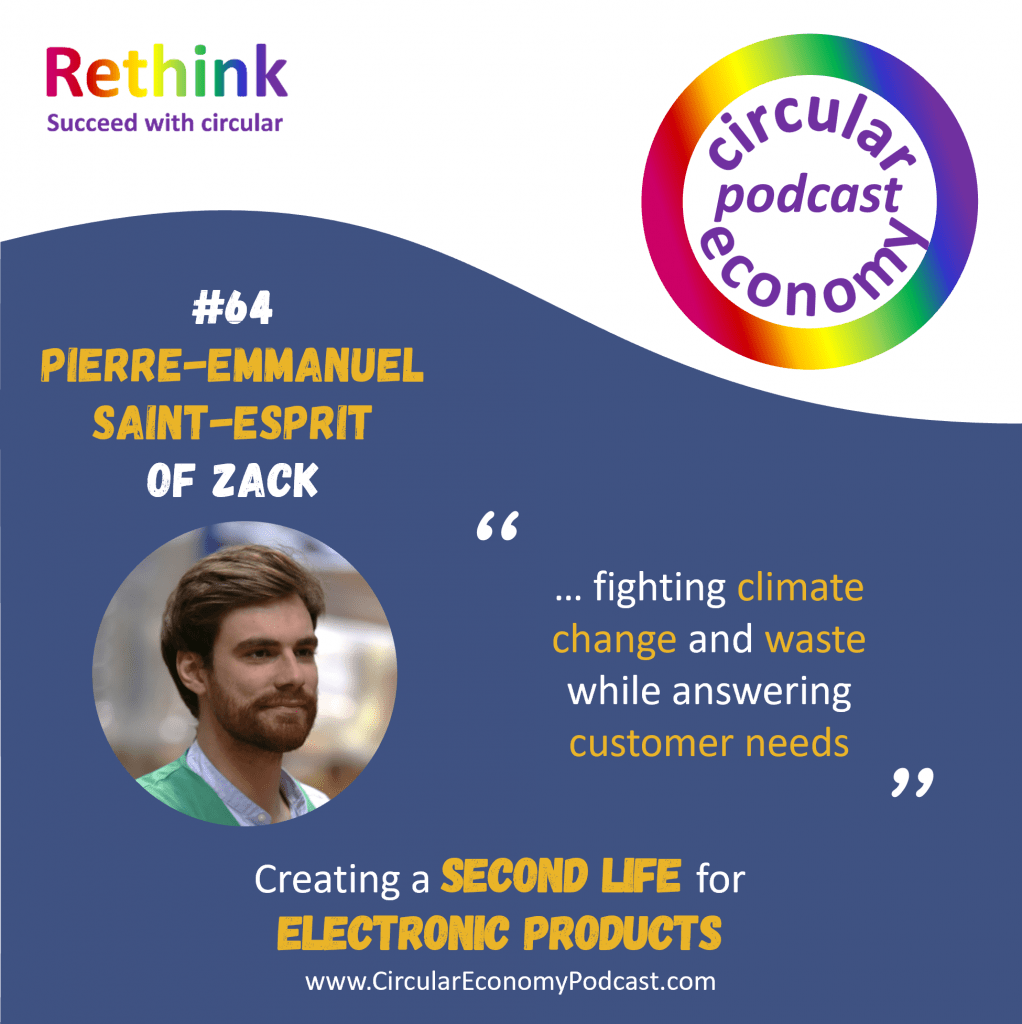
Catherine is with Pierre-Emmanuel Saint-Esprit, the co-founder of ZACK, France’s leading company enabling the second life of electronic products, through recycling, repair, resale and donation. Last year, the TECH FOR GOOD report by the Presidency of the French Republic named ZACK as one of the top 3 French circular companies.
Pierre-Emmanuel has won multiple awards, and is nominated in the Forbes France 30 Under 30 entrepreneurs list.
Pierre-Emmanuel is also Professor of Circular Economy, President of the ESSEC Alumni Entrepreneurs Club, pioneer of the Ellen MacArthur Foundation for the Circular Economy, among other mentoring and advisory roles..
Pierre-Emmanuel explains how his MBA in entrepreneurship at Berkeley, California, helped him create a business to fight climate change, and reduce our pressure on natural resources.
We hear how ZACK co-founders tested their minimum viable product concept, so they could get clear on the value proposition. Pierre-Emmanuel explains how ZACK works with customers through the process, understanding the potential outcomes for the end-of-use products, processing the equipment and building up detailed impact and financial reports for customers.
We discuss the cognitive bias we all suffer from, where we focus on the short term, often favouring the lowest price, and Catherine recommends Wilful Blindess, an excellent book by Margaret Heffernan.
Podcast host Catherine Weetman is a circular economy business advisor, workshop facilitator, speaker and writer. Her award-winning book: A Circular Economy Handbook: How to Build a More Resilient, Competitive and Sustainable Business includes lots of practical examples and tips on getting started. Catherine founded Rethink Global in 2013, to help businesses use circular, sustainable approaches to build a better business (and a better world).
Stay in touch for free insights and updates…
Read on for a summary of the podcast and links to the people, organisations and other resources we mention.
You can subscribe to the podcast series on iTunes, Google Podcasts, PlayerFM, Spotify, TuneIn, or search for “circular economy” in your favourite podcast app. Stay in touch to get free insights and updates, direct to your inbox…
Don’t forget, you can use our interactive, searchable podcast index to find episodes by sector, by region or by circular strategy. Plus, there is now a regular Circular Economy Podcast newsletter, so you get the latest episode show notes, links and transcript delivered to your inbox on Sunday morning, each fortnight. The newsletter includes a link to the episode page on our website, with an audio player. You can subscribe by clicking this link to update your preferences.
Links we mention in the episode:
- A Circular Economy Handbook: How to Build a More Resilient, Competitive and Sustainable Business – buy from any good bookseller, or direct from the publisher Kogan Page, which ships worldwide (free shipping to UK and US) and you can use discount code CIRCL20 to get 20% off. It’s available in paperback, ebook and Kindle. If you buy it from online sources, make sure you choose the new edition with an orange cover!
- Sign up to get the podcast player and shownotes for each new episode emailed to your inbox
- Search for episodes by sector, circular economy strategy, person or organisation, using the interactive episode index on our website
- Email Pierre-Emmanuel pe@zack.eco
- ZACK website zack.eco
- Social media @pesaintesprit and https://www.linkedin.com/in/pesaintesprit/
- Book: Wilful Blindess, by Margaret Heffernan.mheffernan.com/book-wilfulblindness.php
- People mentioned – Maud Sarda – Label Emmaus https://www.label-emmaus.co/fr/
- United Nations Association UK COP26 online support event – Tuesday 19 October, 6pm UK time. Tickets are free – info and booking links here: https://www.unhscotland.org.uk/consumption-retail-and-marketing
About Pierre-Emmanuel Saint-Esprit
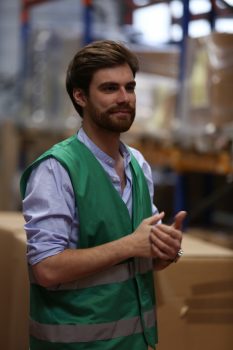 Passionate about the circular economy, Pierre-Emmanuel Saint-Esprit co-founded ZACK at the age of 22 while studying at ESSEC and the University of California Berkeley. Passionate about the circular economy, Pierre-Emmanuel Saint-Esprit co-founded ZACK at the age of 22 while studying at ESSEC and the University of California Berkeley.
ZACK is the leading company in France in the second life of electronic products and the extension of their life (recycling, repair, resale, donation to associations). In 2020, ZACK became one of the top 3 French circular companies according to the TECH FOR GOOD report of the Presidency of the French Republic, with Phénix and Castalie.
That same year, Pierre-Emmanuel won the vote of all BCG employees for the social entrepreneur of the year award. In 2021, he was included the top 50 of the Giverny Circle x Le Point of young committed leaders under 40 who contribute to the acceleration of the digital, ecological and social transformation of France.
Pierre is also nominated in the 30 Under 30 ranking of Forbes France which devotes a list of rising stars of the French entrepreneurial ecosystem.
Pierre-Emmanuel is also Professor of Circular Economy, President of the ESSEC Alumni Entrepreneurs Club, pioneer of the Ellen MacArthur Foundation for the Circular Economy, mentor at Antropia ESSEC, Ambassador of the IMPACT FRANCE Movement and Executive Director of the ESSEC Global Circular Economy Chair.
Pierre-Emmanuel is regularly invited to discuss the challenges of the circular economy and its progress in France (UEED 2020, BFM TV, Le Point, Le Parisien, Le Figaro, Produrable, LH Forum, Cercle de Giverny and others).
Interview Transcript
Provided by AI
Catherine Weetman
Pierre-Emmanuel Welcome to the circular economy podcast!
Pierre-Emmanuel Saint-Esprit
Thank you very much. I’m very happy to be here with you today.
Catherine Weetman
And I’m curious to know, first of all, a bit more about your background and how you came to start ZACK.
Pierre-Emmanuel Saint-Esprit
Yeah. Well, whereas simply I did some commercial school. And I had a master at Berkeley, University of California, Berkeley in entrepreneurship. And I just wanted to confirm the company. And what is incredible with circular economy is that you can you know, at the same time, you can do business and create an economic model where could people create some values, and at the same time, you respect the planet, and you just build a case where you won’t, you know, exhaust the Natural Resources, and it will help the fight against climate change. And it is what was quite fascinating for me, I my parents are not, I will say ecological background minister, I didn’t grew up in this. And what we wanted with ZACK, were just, you know, to us to, to create an economic model where we can help with our ends with our minds, the fight against climate change, and against the fact that we use too many too many natural resources each year.
Catherine Weetman
So did you go into the MBA with the intention of starting something that would help fight climate change? Or did that emerge as you were learning more about what was happening and so on?
Pierre-Emmanuel Saint-Esprit
No, yeah, no, it was it emerged during them during the MBA at the fact is that we we needed to, you know, to form some groups of students to with just two other students project, and my co founder came with his idea to help people to get rid of stuff, you know, use test very easily, and destroy today that quite complicated when you ever use stuff at home, to find the right way to recycle them, to find the right way, maybe to transfer money. And our first idea was to, you know, to go door to door to door in the Berkeley neighbourhood, and we were with some boxes in our hands, we were asking people around the wrong bag fee if they have any steps they want to get rid of. And just the way, they gave us a lot of things, not only electronic products at this times, and our idea, our value proposition was to say, well, we come back to you in maybe five days, 10 days, with with some money, because we will be able to sell it on marketplaces such as eBay, such as you know, Craigslist, in the USA. So it was really the beginning of that it was not really only about climate change, it was about to create a solution that answer a customer needs and at the same time is able to to fight against, get waste. And you know, against climate change. And my conviction is really that we have to do both at the same time to embark maximum of people possible. And to be sure that we have a massive transition.
Catherine Weetman
I agree. In the last episode, where I do every 10th episode, I do a round up of themes for various episodes. And what had been on my mind was the focus of most businesses switching to circular, being more about including some recycled content, making things more recyclable, or switching to new generation materials, or none of that is really addressing the bigger problem. You know, none of that really makes much difference to carbon emissions, because all the recycled materials take a lot of energy to produce. So I started to focus more on, you know, how do we help make the case for extending the life of products or putting them into sharing systems and so on. But obviously, we’ve got to close the loop as we’ve got to close the loop as well. But it’s got to be, it’s got to be more about, you know, the whole system has that not just tinkering a bit with the makeup of what you’re producing.
Pierre-Emmanuel Saint-Esprit
I’m sure we will come back on this later. But it’s quite complicated to to find the right model, as you just mentioned, that a lot of people are trying to do some circular economy trying to find a sustainable solutions. What we have funded, so it was in 2015, we were back in 2015. It’s very different to what we’re doing today. I think we explained something like five economic models from 2015. Well, 2021, because a lot of things, a lot of parameters too, just to see such as, of course, the Christian will like what we do, and are we able to have a massive customer acquisition? And is it possible to earn enough money with that economic model and to have, you know, structure that can last over the years, and so on and so on. So, it’s very complicated. Sometimes you have, you know, you have some ideas, you things are perfect, and it’s very easy. It’s abuse to implement it. And then maybe it’s markets as a different direction to what you were feeling. So yeah, we need to try. Maybe in a few years, it’s going to be easier because the society and just audits will be more secular. So it would be easier to implement numerals with fun. Now, most of the time you you fight against, you know, added from the past.
Catherine Weetman
That Yeah, that’s fascinating. And you know, it’s pretty inspiring to hear that you’ve gone through five different economic models. So it’s kind of keeping to evolve and and pivot on the on the route of On the way to finding out finding something that really works to make the business financially sustainable. So perhaps you could explain a bit more about what Zack actually actually does. Having started with that minimum viable product back in 2015, collecting from people’s doors, what does what does it look like now?
Pierre-Emmanuel Saint-Esprit
Yeah. So basically, what we want to do is to give a second life to every used electronic product, the idea is to eradicate your waste. And you know, a lot of products are directly considered as a waste. So we go into a company’s headquarters, and we’d pick up every used luxury products and accessories. So it could be computers, it could be funds, it could be scanners, it could be a lot of different things, then we make an inventory of every electronic products in our logistics centre. And we can say that, thanks to these inventories, that this product can be set it can be solved sorry. So it can be you can have another use in another life, this product can be given to charity, this problem maybe can be repaired. And finally, this is the last solution. So product is recycle, if it is not possible to do to do something else. So I think we’re really lacking this, a lot of products go directly to recycling, and sometimes go directly into streets or into our oceans. But sometimes we say, okay, it’s perfect, because this is recycled. But, of course, as you say, before, recycling consumes a lot of energies, most of the time, we’re not able to recycle everything in the product in the ballpark. And everything then is a waste in in burning, I will say. So the idea is to optimise as a single added product. And then 30 days after the peak of the products inside the company, we come back with a final report. So we are able to say, Okay, thank you actually, we have sold your products for 2000 euros. So this is a win win. And we come back with so with a big CSR report. In the CSR report, we indicate our match co2 emissions as been avoided thanks to this action, because new Natural Resources won’t be extracted. One, one travel all over the world. And so we give a lot of information about the volumes of products about the specific Natural Resources contained into the product such as lithium, terra , rare rarefied – I don’t know how to say it in English!
Catherine Weetman
rare earth minerals, yeah, yeah,
Pierre-Emmanuel Saint-Esprit
thank you. And then and then this report can be integrated, you know, in extra financial reports of the companies. And we know, after the covid 19 crisis, and maybe there is a momentum, a lot of companies are looking to reduce their emissions. And now looking also to to have some proof, and to have some figures and numbers about the action. So this CSR report is, is very important. And to show really, what does it do, really the impact, and also great traceability of the products, because everything, this is our choice, but everything is solved given or recycled in France. So we are sure that we don’t produce emissions by making all the products travelling, it is our choice, because if we want to launch a country, for example, Spain or Germany, we have to rebuild everything the entire logistics supply chain, but because if you collect some product in Spain, and then you make them travel into France, it’s complicated at the end to have, you know, a good carbon balance in the same bed. But this is what we do. And we have also a service for customers. So for individuals, if you have any items at home, so in France in Belgium, you can use our website – that’s Zack DOT eco and the idea is to create a reverse marketplace. So very concretely, on a basic marketplace, you can buy something on a reverse marketplace, you can get rid of something. And the reverse marketplace is going to indicate you what can be sold or what can be given or what can be recycled, and you have a wallet, such as a religious wallet or a bank account is about going to credit your bank account with the with the amount we have been able to receive thanks to the sending of your products.
Catherine Weetman
So really full solution then for both businesses and customers. And just coming back to the business CSR Report. I’m interested to understand a bit more about how you quantify them. The materials impact is that at a generic level, so you know, a laptop would typically be a laptop that’s reused will typically save this much carbon. You know, this ghetto will contain this much plastic or is it a kind of specific manufacturer model level of detail. So you know, an iPad is this Samsung tablet is is different.
Pierre-Emmanuel Saint-Esprit
Yeah, thanks to our past activities and past economic models we have built, we have a lot of preferences in our data system. Because in 2018, for example, we made some estimation of products. So you you had an estimation of your product between B to D before you get rid of that. So we have a lot of big data infrastructure with a lot of references of electric products. And we were just a range that we added things that for this reference, so for example, an iPad in 2018, in this state and so on, if you re… if you give a second life to this product, so you don’t recycle it, you don’t dismantle it, you’re going to spare external equivalent co2. So this is for each reference, we are able to say that and that what we do thanks to the inventory, we calculate line by line, item by item, what has been spelled saying to that, of course, when it comes to an for example, accessories, such as I don’t know, lighter or some small accessories, this is a rough knowledge. Yeah, my generate calculation, but we we wants to do something very specific and to be very precise, to be to be sure that there is not greenwashing, which is really a true engage action, to fight against waste and to reduce the environmental footprint of public content.
Catherine Weetman
Hmm – good stuff
Pierre-Emmanuel Saint-Esprit
We’ve been, we’ve been – this model has been validated by the ADEME. So the French agency for the government, because relevant by ADEME – it’s called autopris en gadget, Partenaires d’Ecologic, so a company fighting for the ecological transition in France, and we are able to deliver a new world of certificates to the companies that fight waste with Zack service. It’s a certificate that really, well, certifies basically, that this company does true actions against against this display.
Catherine Weetman
So there must be quite a lot of IP included in all of that intellectual property, you know that that’s part of your company’s service specific offer?
Pierre-Emmanuel Saint-Esprit
Yeah, well, we’re not very good at that to be to be honest. Maybe because we’re still quite young entrepreneurs and maybe a bit naive. But, but we’re not very good at the intellectual property, I would say, but yet we have to protect. We have to protect our science, I would say, to dig more deeper into that.
Catherine Weetman
Yes, yes. So just going back to the transactions that you have with individual people, do you give them when when the products come in and can be reused? Do you apply a standard to those that gives people an insight into how good the condition is? And do you offer a warranty to sit behind the reused products? How does all that work?
Pierre-Emmanuel Saint-Esprit
You mean, financially speaking, do we give them a reward, a financial reward?
Catherine Weetman
Now when you when you sell on the re…, so any products that have come in from one customer, you’ve inspected them decided they’re good enough for reuse? So they then get sold on? Are you selling them directly to other people? Or do they go into another another |



.png)
 More
More
 Religion & Spirituality
 Education
 Arts and Design
 Health
 Fashion & Beauty
 Government & Organizations
 Kids & family
 Music
Music News & Politics
 Science & Medicine
 Society & Culture
 Sports & Recreation
 TV & Film
 Technology
 Philosophy
 Storytelling
 Horror and Paranomal
 True Crime
 Leisure
 Travel
 Fiction
 Crypto
 Marketing
 History
 Comedy
 Arts
Arts Games & Hobbies
 Business
 Motivation