|
Description:
|
|
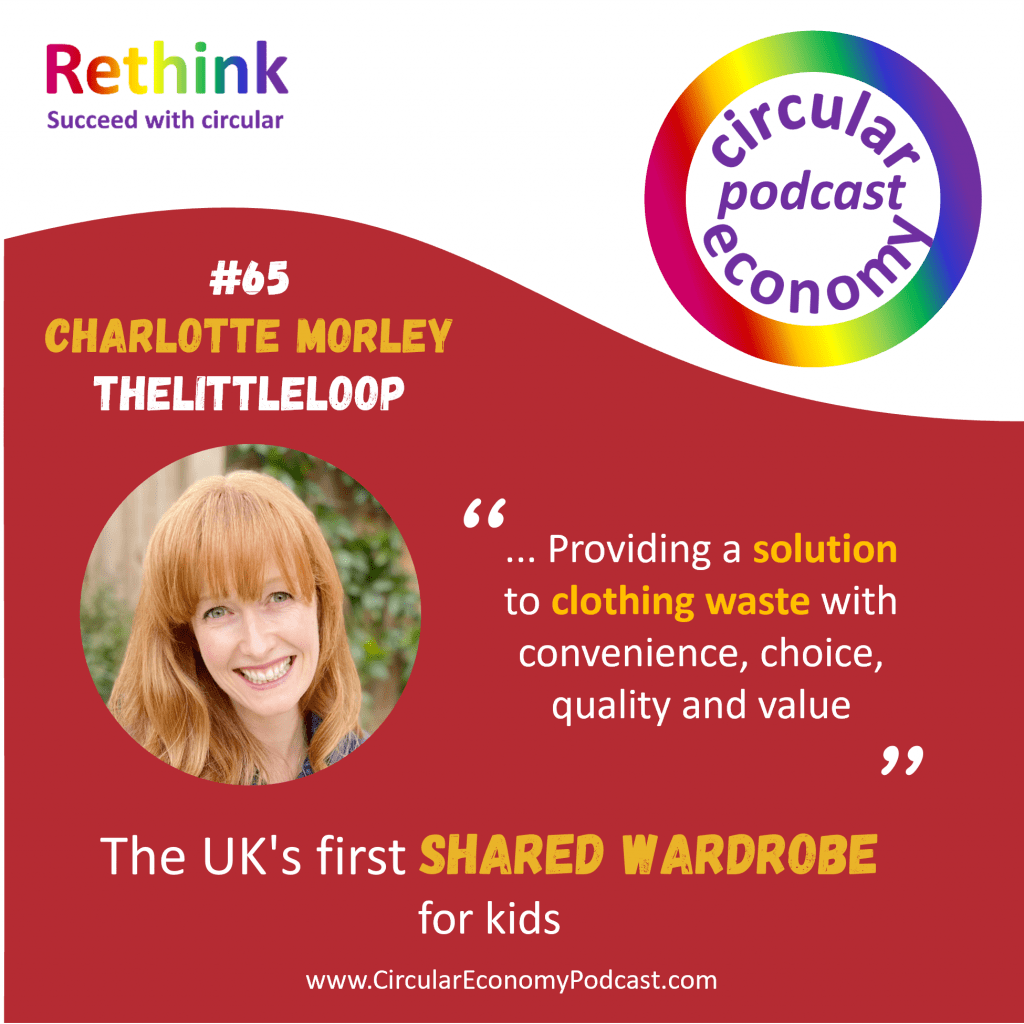
The UK’s first shared wardrobe for kids… Charlotte Morley founded thelittleloop to offer a solution to clothing waste with convenience, choice, quality and value. Charlotte grew up being an advocate for sustainability, and found becoming a parent was a watershed moment. The fear of an uncertain future drove Charlotte to make big changes in the way she lived.
But, when it came to dressing her children she couldn’t find a satisfactory solution to the waste that rapidly-growing mini-humans create. Hand-me-downs were haphazard and offered no choice. Buying new then trying peer-to-peer resale was incredibly time consuming and didn’t recover much of the original cost. Charlotte was intrigued by how to incentivise children’s clothing brands to create garments that would last.
Shocked by the problems of under-used clothing and frustrated by the lack of convenient solutions, she decided to solve the problem by working with children’s clothing brands to create a rental service, thelittleloop.
Charlotte drew on her background in retail and technology, and set out to build a solution offering maximum convenience, choice, quality and value, at the same ensuring each garment lives its full potential life.
Charlotte founded her business while working as Head of Digital Product at Notonthehighstreet – and now runs thelittleloop full time. She describes it as both the biggest risk she’s ever taken, and the best thing she could imagine doing for her children’s future.
Thelittleloop works hand in hand with brands, who take a share of the rental revenue, sharing responsibility for the lifespan of the garments, and receiving data to help improve their production standards. Charlotte’s business is already winning awards, including from Marie Claire and Junior magazine, and was featured in the Guardian last month.
Podcast host Catherine Weetman is a circular economy business advisor, workshop facilitator, speaker and writer. Her award-winning book: A Circular Economy Handbook: How to Build a More Resilient, Competitive and Sustainable Business includes lots of practical examples and tips on getting started. Catherine founded Rethink Global in 2013, to help businesses use circular, sustainable approaches to build a better business (and a better world).
Stay in touch for free insights and updates…
Read on for a summary of the podcast and links to the people, organisations and other resources we mention.
You can subscribe to the podcast series on iTunes, Google Podcasts, PlayerFM, Spotify, TuneIn, or search for “circular economy” in your favourite podcast app. Stay in touch to get free insights and updates, direct to your inbox…
Don’t forget, you can use our interactive, searchable podcast index to find episodes by sector, by region or by circular strategy. Plus, there is now a regular Circular Economy Podcast newsletter, so you get the latest episode show notes, links and transcript delivered to your inbox on Sunday morning, each fortnight. The newsletter includes a link to the episode page on our website, with an audio player. You can subscribe by clicking this link to update your preferences.
Links we mention in the episode:
About Charlotte Morley
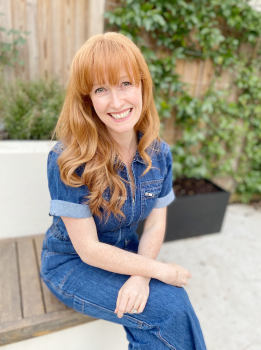 Charlotte Morley founded thelittleloop while working as Head of Digital Product at Notonthehighstreet – leaving her role to build it full time. She describes it as both the biggest risk she’s ever taken, and the best thing she could imagine doing for her children’s future. Charlotte Morley founded thelittleloop while working as Head of Digital Product at Notonthehighstreet – leaving her role to build it full time. She describes it as both the biggest risk she’s ever taken, and the best thing she could imagine doing for her children’s future.
Although a lifelong sustainability advocate and geographer, Charlotte found parenthood to be a watershed moment for personal environmental action. The fear of an uncertain future for her children drove her to make significant changes in the way she lived – reducing her consumption and switching to less wasteful habits.
However, when it came to dressing her children she couldn’t find a satisfactory solution to the waste that rapidly growing mini-humans create. Hand-me-downs were haphazard and offered no choice, and the existing system of purchasing then reselling peer-to-peer was incredibly time consuming and rarely financially rewarding. Plus, she was particularly struck by the problem of how to incentivise children’s clothing brands to create garments which would last.
And so, drawing on her background in retail and technology, she set out to build something which would turn the outdated system of buying and re-selling on its head – offering maximum convenience, choice, quality and value, while simultaneously guaranteeing each garment lives its full potential life.
And she did so working hand in hand with brands, who take a share of the rental revenue, sharing responsibility for the lifespan of the garments, and receiving data to use in improving their production standards.
Interview Transcript
Provided by AI
Catherine Weetman 00:01
Successful circular businesses compete on value, convenience, choice and quality. And they’re better for people and planet. Hello, and welcome to the circular economy podcast, where we find out how circular approaches are better for people, planet and profit. I’m Catherine Weetman, everything global. And I’ll be chatting with those people making the circular economy happen. rethinking how we design, make and use everything. We’ll talk to entrepreneurs and business owners, social enterprises and leading thinkers. You find the show notes, links and transcripts at Circular Economy podcast.com where you can subscribe to updates and our fortnightly edition of circular insights.
Catherine Weetman 00:52
It’s episode 65. Welcome back to the circular economy podcast. And if this is your first episode, I hope you enjoy the show. Today we’re talking to Charlotte Morley, who grew up being an advocate for sustainability and found becoming a parent was a watershed moment. The fear of an uncertain future drove Charlotte to make big changes in the way she lived. But when it came to dressing her children, she couldn’t find a satisfactory solution to the waste that rapidly growing many humans create Hami downs were haphazard on off at no choice. buying new than trying peer to peer resale was incredibly time consuming and didn’t recover much of the original cost. Charlotte was intrigued by how to incentivize children’s clothing brands to create garments that would last shocked by the problems of underused clothing, and frustrated by the lack of convenient solutions. She decided to solve the problem by working with child children’s clothing brands to create a rental service the little loop, Charlotte drew on her background in retail and technology and set out to build a solution offering maximum convenience choice, quality and value. At the same time ensuring each garment lives its full potential life. Charlotte founded her business while working as head of digital product at not on the high street, and now runs the little loop full time. She describes it as both the biggest risks she’s ever taken, and the best thing she could imagine doing for her children’s future. The little loop works hand in hand with brands who take a share of the rental revenue, sharing responsibility for the lifespan of the garments and receiving data to help improve their production standards. Charlotte’s business is already winning awards, including from Mary Claire, and Junior. Magazine, and was featured in The Guardian last month. Let’s hear from Charlotte. And as usual, I’ll catch up with you afterwards to share what I took away from our conversation. Charlotte, welcome to the circular economy podcast,
Charlotte Morley 03:13
Catherine, Hello.
Catherine Weetman 03:15
It’s great to see you on the other end of a zoom call. And before we get into the detail of how you started the little loop, perhaps you could just give us a quick overview of how it all works.
Charlotte Morley 03:27
The little loop is that the UK’s first shared wardrobe for kids, which essentially means a rental service for children’s clothing, which we’ve designed to try to improve the environmental impact of children’s clothing whilst also improving the process for parents and just making life easier, more convenient, more cost effective, and guilt free, actually, relative to the kind of standard linear method of purchasing children’s clothes.
Catherine Weetman 03:57
I love that phrase the shared wardrobe. I really like that. So how did all of this start? What What brought you to starting this business?
Charlotte Morley 04:08
Um 95% of the time we make our decisions based on instinct. So we’re only kind of 5% rational beings. And that’s something which definitely I’ve in retrospect recognised applies myself. So to change our habits is not an easy thing. It’s not easy to change instinct. And it takes big life changing events for us to change our habits. And what happened to me was I had a child and I think this happens an awful lot. And a lot of businesses do get formed when people have children and that’s why it’s because when we have children, we shift our habits we shift the way that we think and I think for me, although I’d been theoretically a sustainability advocate for years, it was having a child that actually made me start to make changes in my life. So the biggest and the probably the first thing I did was actually shift to using cloth nappies on my kids and everyone He said, Are you crazy, it’s going to take so much time, it’s going to be horrendous. And actually, this is very topical, because the government’s just announced a tax on disposable nappies aimed at getting people to use more Reusables. And what I discovered very quickly was, it wasn’t very hard, it wasn’t very time consuming, a tiny bit more, I’m not gonna lie. It wasn’t hideous. And actually, I got a huge amount of pleasure from it, because I felt so good about what I was doing. And I realised that actually, if there were more solutions like that out there, and moreover, if it was made to be easy, it’s I think, what’s hard about cloth nappies is, it seems very daunting, doesn’t seem easy, doesn’t seem like something that you can just do. And that’s what puts people off doing it. And there’s a lot of preconception around it. And when I started doing, I discovered, it really was easy. So to cut a very long story short, what I realised was that, particularly in the in the children’s wear space, there was a big opportunity to make more sustainable ways of doing things easier. And to build a service, which made being environmentally friendly, and being more sustainable, reducing waste, something that actually was a bit of a no brainer, that wasn’t only better for the environment, but was better for the parents as well. And it was a real pain point for me that the clothing wasting, I just hadn’t even thought about it, how quickly children grow, how much you’re going to these clothes. And I used to think it would be a lovely thing to be buying new clothes all the time, or what a great experience these cute little things. It’s so painful. And more more because of getting rid of the old ones is what do you do with them? I felt it was it was incredibly tedious, time consuming, but it was also very wasteful, and I hated it, I would feel genuinely sick every time. So that’s that all of that together is where the little loop came from. And I would sit at night breastfeeding, my child kind of my brain didn’t stop racing for months and months, like, what can I do? How can I fix this? This is broken, and it needs to be fixed. And that’s that’s where it came from.
Catherine Weetman 06:57
So all those lost lost hours of sleep. This? Yeah, and you probably didn’t know whether it was you know, would you have slept through that if your brain wasn’t already on overtime? To solve all these problems? Exactly. The two things working in perfect harmony. So yeah, and I think the the kind of the the lack of convenience with reuse, we forget about don’t wait, as you say most people do think about the excitement of buying new things, and not about the headache of of getting rid of them. I was just watching something on TV last week, you know yet another decluttering programme, and you and you kind of see how people have got attached to what seem to us to be completely illogical things or just haven’t got around to getting rid of things. Because what do I do with this, that’s, I don’t really want to just put it in the dustbin because that’s wasteful. But everything else requires investment in in more time and that we that we haven’t really got.
Charlotte Morley 08:04
And I think we just accept it. As this is the status quo. This is what people do. You just build up stuff and you keep it and I think we underestimate how detrimental It is to your mental health to have stuff building up and up and to be constantly seeing it because you are and you’re especially if you don’t live in a huge house, and lots of us, particularly living in cities, you’re living in flats and things. And people have bags and boxes of things on top of wardrobes underneath beds, it’s very bad for your mental well being because you’re subconsciously feeling all the time hemmed in and cluttered. And, you know, it’s been a side element to this, you know, it wasn’t maybe the core driver, but certainly, and I am quite a neat freak. I’ll be honest. But I do think it’s really important to acknowledge that we’ve accepted that stuff is what we should have. And actually we don’t need stuff. We don’t need as much stuff as we have. But because it’s so hard to get rid of it. You know, we just we just take it.
Catherine Weetman 09:01
Yeah, I think there’s there’s lots of interesting stuff being you know, researched, and, and brought brought to people’s attention in that whole area about the sort of hidden aspects of stuff and our mental health and so on. So, could you tell us a bit more about how the little loop works in practice for customers, you know, what, what do people do and what kind of clothes and brands and so on how to Pete How long do people keep things for? Talk her through that if he could?
Charlotte Morley 09:35
Yeah, of course. So we built the little loop hand in hand with parents and we, you know, we spoken to as many parents as we can to build a service which we think is as seamless as possible. And as I say I was driven obviously by the environmental sustainability aspect, but really also very heavily driven by convenience. And so what we you’ve ended up building is, as I said, we describe it as a shared wardrobe. Because the idea is that it’s one huge wardrobe in the cloud, which you can take items in and out of as and when you need them, you don’t have to buy all those things and have them in your house, you simply rent what you need when you need it. And then when you finish with it, you put it back into our shared wardrobe and you take something else, it’s as simple as that, really, obviously, the, the mechanism for making that work is, well, not obviously, the mechanism for making that work is a subscription, a rental subscription. And the subscription gives you access to that wardrobe. So as long as you have a live subscription, you can be taking clothes in and out of the wardrobe as and when you want to. Most parents tend to do it about every three months, they’ll choose a new set of clothes, so if the child’s grown, or if the seasons have changed, or they’ve got bored, because let’s face it, we all do get sometimes bored of our clothes. And our children do. You know, we have a lot of people who sweat because they they’ve got something for their child who said, I’m not going to wear that. And rather than in a purchase scenario where it just then hangs in the wardrobe, because you think maybe they’ll wear it, you just send it back and you choose something else. So it’s genuinely as simple as that. And a lot of rental services, they kind of insist on you having a set number of clothes, and you’re having it for a set amount of time. From the beginning, I was very keen not to limit our customers in that way. And so we built it in a way that means you can have, you have a set number of credits, which you can spend as you want to on the clothes. So that would mean you could get probably around, say 10 T shirts, or three coats, you know, it depends on what you need. You can have you can buy more credits to have access to more items or clothes, or you can have fewer to have access to fewer items. So you can use it very flexibly as you want to. And you can hang on to them for as long as |



.png)
 More
More
 Religion & Spirituality
 Education
 Arts and Design
 Health
 Fashion & Beauty
 Government & Organizations
 Kids & family
 Music
Music News & Politics
 Science & Medicine
 Society & Culture
 Sports & Recreation
 TV & Film
 Technology
 Philosophy
 Storytelling
 Horror and Paranomal
 True Crime
 Leisure
 Travel
 Fiction
 Crypto
 Marketing
 History
 Comedy
 Arts
Arts Games & Hobbies
 Business
 Motivation