|
Choosing between the Audio Technica AT2020 and AT2035 can seem challenging, given their similar acclaim in the audio world.
Yet, a closer examination reveals key differences that could sway your decision. This AT2020 vs AT2035 comparison sheds light on those distinctions, guiding you to the microphone that best suits your recording needs.
From nuanced sound quality to versatile features, find out which model is the superior choice for your studio or live recordings.
Key Takeaways
|
02/18/2024 12:13 pm GMT
|
|---|
| AT2020 | AT2035 | | Cardioid polar pattern for focused pickup | Cardioid polar pattern with enhanced sound isolation | | Fixed-charge back plate, permanently polarized condenser | Fixed-charge back plate, permanently polarized condenser with a larger diaphragm | | No pad or filter options included | Includes a switchable 80 Hz high-pass filter and 10 dB pad | | Requires 48V phantom power | Requires 48V phantom power, optimized for more headroom | | Rugged construction for durable performance | Rugged build with a shock mount included for reduced handling noise | | Ideal for project/home-studio applications | Suited for both project/home studios and live settings with higher SPL handling |
This table provides a concise comparison to help discern the differences and
AT2020 Overview
The AT2020 is a cardioid condenser microphone for entry level users, but you wouldn’t know it based on the specifications and, more crucially, the audio quality this instrument delivers.
Because of the quality of the audio it generates – a very faithful reflection of the original sound – this microphone is best suited to voice recordings and is recognized as a fantastic equipment for capturing singing.
It also has a black cast metal structure, with two levels of wire mesh shielding the main capsule and aiding in pop reduction – but, as a general rule, one should always try to record with an extra pop filter anyway.
  Why Do You Need a Microphone Pop Filter? Why Do You Need a Microphone Pop Filter?
Pros and Cons
Pros  | Cons  |
|---|
 Excellent audio quality for the price Excellent audio quality for the price |  Lacks advanced features like high-pass filter and pad Lacks advanced features like high-pass filter and pad |  Great value for entry-level users Great value for entry-level users |  Requires external pop filter for optimal performance Requires external pop filter for optimal performance |  Robust metal construction for durability Robust metal construction for durability |  Limited versatility compared to higher-end models Limited versatility compared to higher-end models |  Good off-axis noise rejection Good off-axis noise rejection |  No built-in attenuation options No built-in attenuation options |  Ideal for voice recordings and singing Ideal for voice recordings and singing |  Fixed cardioid pattern only Fixed cardioid pattern only |
AT2035 Overview
The AT2035, which was released some years after the Audio-Technica AT2020 Cardioid Condenser microphone was released and much loved by the world, intends to expand on the success of the AT2020 by providing a similarly great value proposition, superb audio, build quality, and numerous important advancements over the original AT2020 design.
The AT2035 is a large diaphragm condenser microphone with a fixed-cardioid pattern and has a similar style and black cast metal construction as the AT2020.
And, like the AT2020, it has outstanding off-axis rejection of noises from the unit’s back and side angles.
Pros and Cons
| Pros | Cons |
|---|
| Superior sound quality with detailed highs and rich lows | Slightly higher price point than AT2020 | | Includes high-pass filter and -10 dB pad for versatile recording |  Design is not significantly different from AT2020 Design is not significantly different from AT2020 | | Excellent off-axis noise rejection and sound isolation | Might require additional accessories for optimal setup | | Durable metal construction and sleek design | Fixed cardioid pattern only |  Broad frequency response for versatile recording applications Broad frequency response for versatile recording applications | Some users may not need the extra features for basic recording tasks |
Build And Design
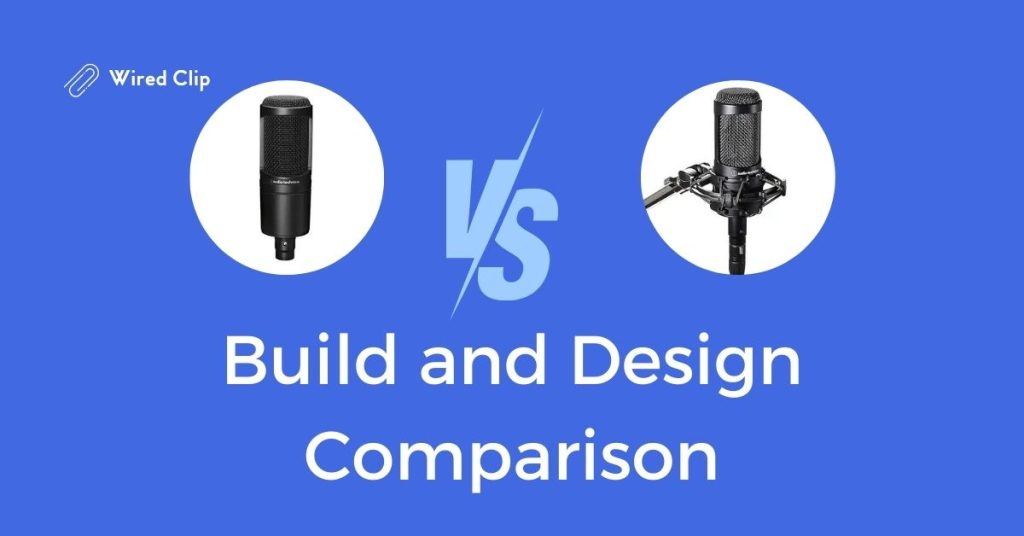
In the realm of build and design, both microphones shine with their sleek aesthetics and robust construction, marrying elegance with durability.
Design Aesthetics and Durability
The Audio Technica AT2020 showcases a straightforward yet elegant design, featuring a glossy black finish that adds a touch of luxury.
Its construction is robust, ensuring long-term durability. Similarly, the AT2035 maintains a sleek and slim profile, indicative of thoughtful design considerations that extend beyond mere performance.
Accessories and Functionality
Both microphones come equipped with essential accessories, enhancing their usability. The AT2020 includes a pivoting shock mount compatible with most microphone stands, allowing for versatile mounting options.
It also features a pop filter, which is crucial for reducing plosive sounds and protecting the microphone from saliva, extending its lifespan.
This inclusion highlights the attention to detail in Audio Technica’s design, considering both audio quality and microphone longevity.
Technical Specifications and Connectivity
Both the AT2020 and AT2035 require phantom power and an external power source like a preamp or an audio interface.
As XLR microphones, they need XLR cables for connection, with the AT2020 notably coming with a 20-foot XLR cable for added convenience.
The power requirements slightly differ between the two, with the AT2020 needing 48V DC and 2mA and the AT2035 requiring 11-52V and 3.8mA.
The AT2035 also boasts a superior carrying case compared to the AT2020’s simpler offering, underscoring the slight distinctions in the product offerings.
Performance
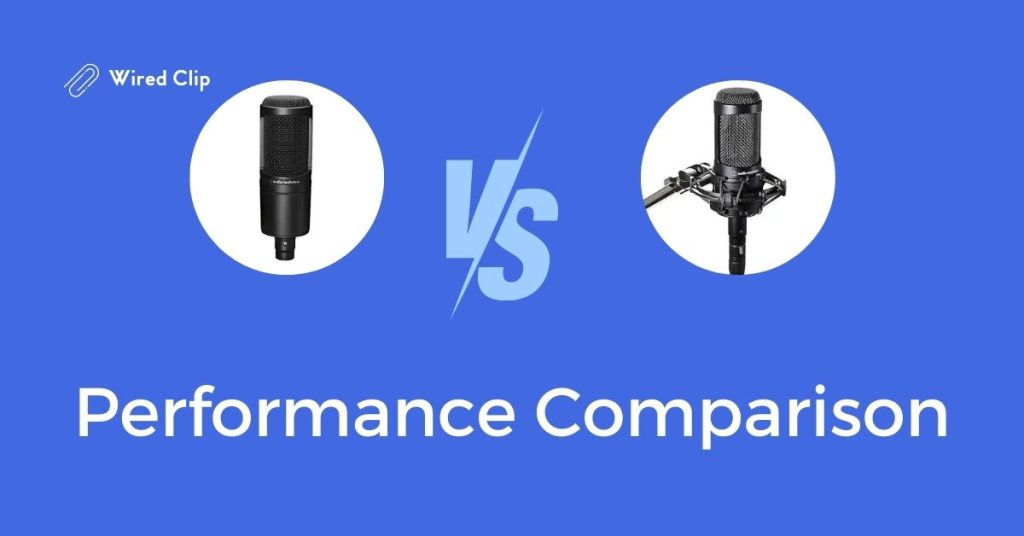
Performance-wise, the AT2035 edges out the AT2020 with its enhanced features and superior sound quality, offering a richer and more versatile audio experience.
Enhanced Features and Sound Quality
The AT2035 represents a significant leap forward from its predecessor, the AT2020, offering notable upgrades for a modest price increase.
For an additional $50, the AT2035 brings to the table advanced features such as a high-pass filter at 80 Hz with a 12 dB/octave slope and a -10 dB pad, catering to louder sound sources without distortion.
The fixed cardioid pattern remains consistent with the AT2020, eliminating the need for any adjustments.
 Your browser does not support the audio element.
| 


.png)
 More
More
 Religion & Spirituality
 Education
 Arts and Design
 Health
 Fashion & Beauty
 Government & Organizations
 Kids & family
 Music
Music News & Politics
 Science & Medicine
 Society & Culture
 Sports & Recreation
 TV & Film
 Technology
 Philosophy
 Storytelling
 Horror and Paranomal
 True Crime
 Leisure
 Travel
 Fiction
 Crypto
 Marketing
 History
 Comedy
 Arts
Arts Games & Hobbies
 Business
 Motivation