|
Want to continue learning from the world’s experts on time management, networking, career development, better sleep, overcoming burnout, and so much more? → Click here for your customized podcast playlist My guest today is Will Storr, an award-winning writer and author of the book The Science of Storytelling: Why Stories Make Us Human and How to Tell Them Better. In our conversation together, Will and I dive deep down the rabbit hole to understand the inner workings of storytelling and discuss why the attraction to stories is a key part in not only our own personal human evolution, but the evolution of our society as a whole. Will shares many of his unconventional approaches to storytelling (including why he doesn’t believe we need to follow a strict formula). He also shares why he believes character development should come before the plot and how that approach can even be used to help you achieve your own goals. Will and I also talk about why ‘gossip’ is fundamental to us as humans and why it can make even the smartest people believe the craziest things. As you’ll hear in our conversation, Will and I fully nerd out on the science and psychology of storytelling. Not only will you understand as a creative how to better write your own stories, but you’ll learn how to apply Will’s unconventional approaches to rewrite the story of your own life. Whether or not you’re working in a creative industry, I know you’ll find this conversation as helpful and entertaining as I did. Want to Hear More Episodes Like This One?» Click here to subscribe and never miss another episode Here's What You'll Learn:- Why Will says there's 'science' in storytelling (and doesn’t believe we need to follow a formula)
- The real reason stories are so important to us as human beings
- Why 'gossip' is fundamental to the human condition
- Why the way we see reality affects the way we tell stories (and how you can use your brain to shift that perspective)
- How our brains are programmed to be interested in pursuit of goals and overcoming the obstacles along the way
- How can people be so smart, yet still believe the craziest things (some people believe the holocaust didn't happen?!)
- Why we tend to believe what makes us feel good and heroic
- What makes the aspect of ‘change’ so crucial to the art of storytelling
- What the Kuleshov Effect is and how we can apply it to both our storytelling and lives
- What Will means when he says we are our own personal projects
Useful Resources Mentioned:The Science of Storytelling: Why Stories Make Us Human and How to Tell Them Better by Will Storr The Writer's Journey: Mythic Structure for Writers by Chris Vogler The Hero’s Journey (Joseph Campbell) Downfall movie Joseph Campbell and the Power of Myth (with Bill Moyers) The Kuleshov Effect Thinking, Fast and Slow by Daniel Kahneman Continue to Listen & LearnEp211: Severance Creator Dan Erickson On Staying True to Your Creative Vision, Becoming An “Overnight Success,” and the Blurred Lines Between Work & Life Ep206: Career & Life Advice from The Office Director & Producer | with Jen Celotta Ep205: Using the Hero’s Journey to Write Better Stories (and Live a Better Life) | with Chris Vogler Ep181: Overcoming a Dark Past (and Managing the Voices In Your Head) to Become Successful In Hollywood | with Christopher Titus Ep158: Leveling Up Your Ability to Tell More Engaging Stories using EditMentor | with Misha Tenenbaum Ep132: How to Pursue Fulfilling Work and Find Your ‘Calling’ | with Dr. Tal Ben-Shahar Ep16: Writing Your Own (Unique) Path to the Top | with Wendy Calhoun Ep11: Making It In Hollywood as a “Creative” (What They Don’t Teach You In Film School) | with Norman Hollyn Guest Bio: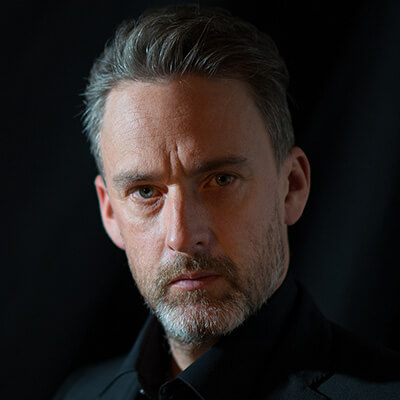 Will Storr Will Storr
  
Will Storr is an award-winning writer. He’s the author of six critically acclaimed books, including the novel The Hunger and The Howling of Killian Lone and the Sunday Times bestseller The Science of Storytelling. His journalism has appeared in titles such as The Guardian, The Sunday Times, The New Yorker and The New York Times. His prizes include a National Press Club award for excellence and the AFM award for Best Investigative Journalism. His work on sexual violence against men earned the Amnesty International Award and a One World Press Award. He’s also been presented with the AIB Award for Best Investigative Documentary for his BBC radio series. He teaches popular storytelling classes in London and has been invited to present his Science of Storytelling workshop all over the world. He’s an in-demand ghostwriter whose books have spent months at the top of the Sunday Times bestseller chart and have sold more than two million copies. Show Credits:This episode was edited by Curtis Fritsch, and the show notes were prepared by Debby Germino and published by Glen McNiel. The original music in the opening and closing of the show is courtesy of Joe Trapanese (who is quite possibly one of the most talented composers on the face of the planet). |



.png)
 More
More
 Religion & Spirituality
 Education
 Arts and Design
 Health
 Fashion & Beauty
 Government & Organizations
 Kids & family
 Music
Music News & Politics
 Science & Medicine
 Society & Culture
 Sports & Recreation
 TV & Film
 Technology
 Philosophy
 Storytelling
 Horror and Paranomal
 True Crime
 Leisure
 Travel
 Fiction
 Crypto
 Marketing
 History
 Comedy
 Arts
Arts Games & Hobbies
 Business
 Motivation